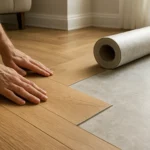
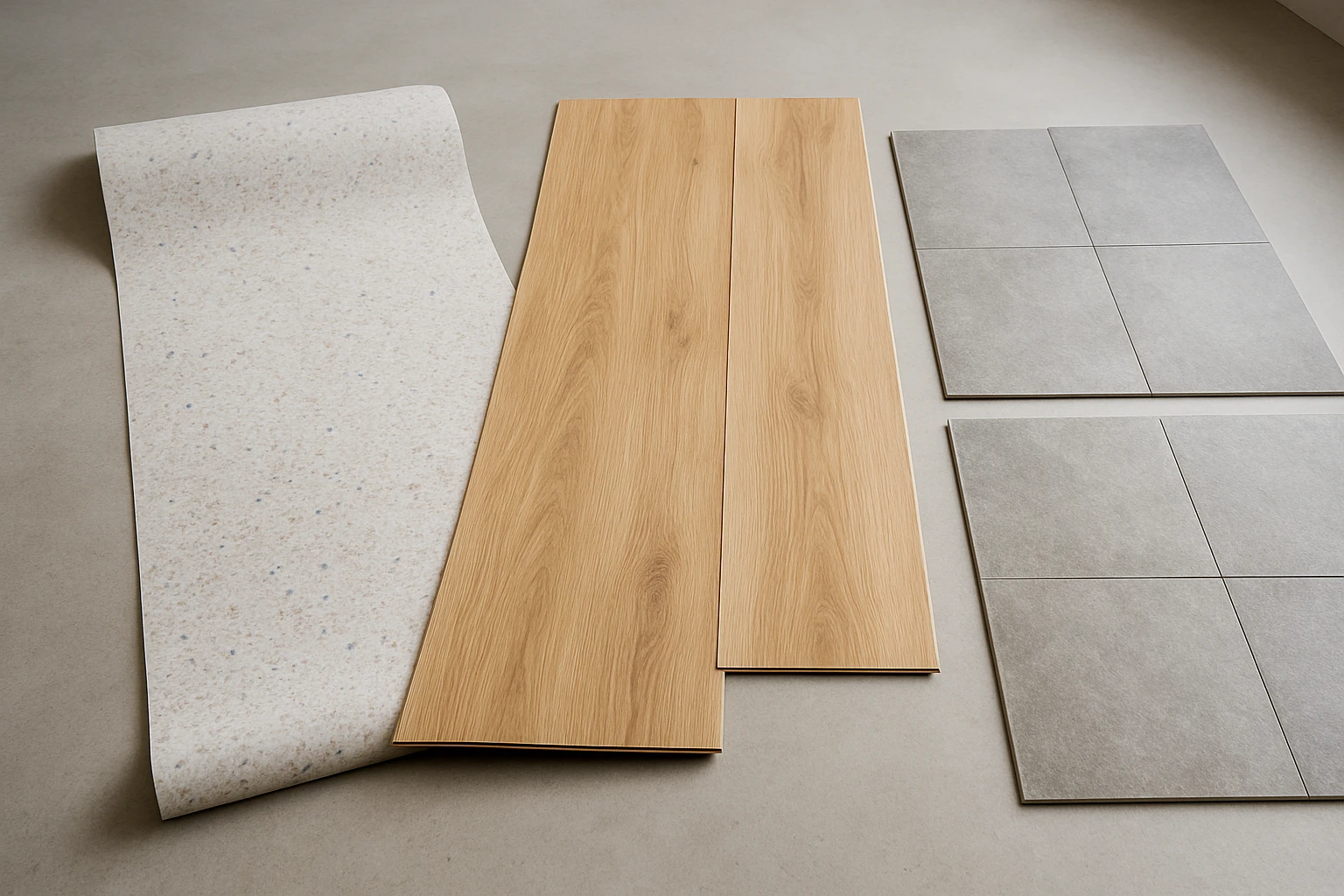
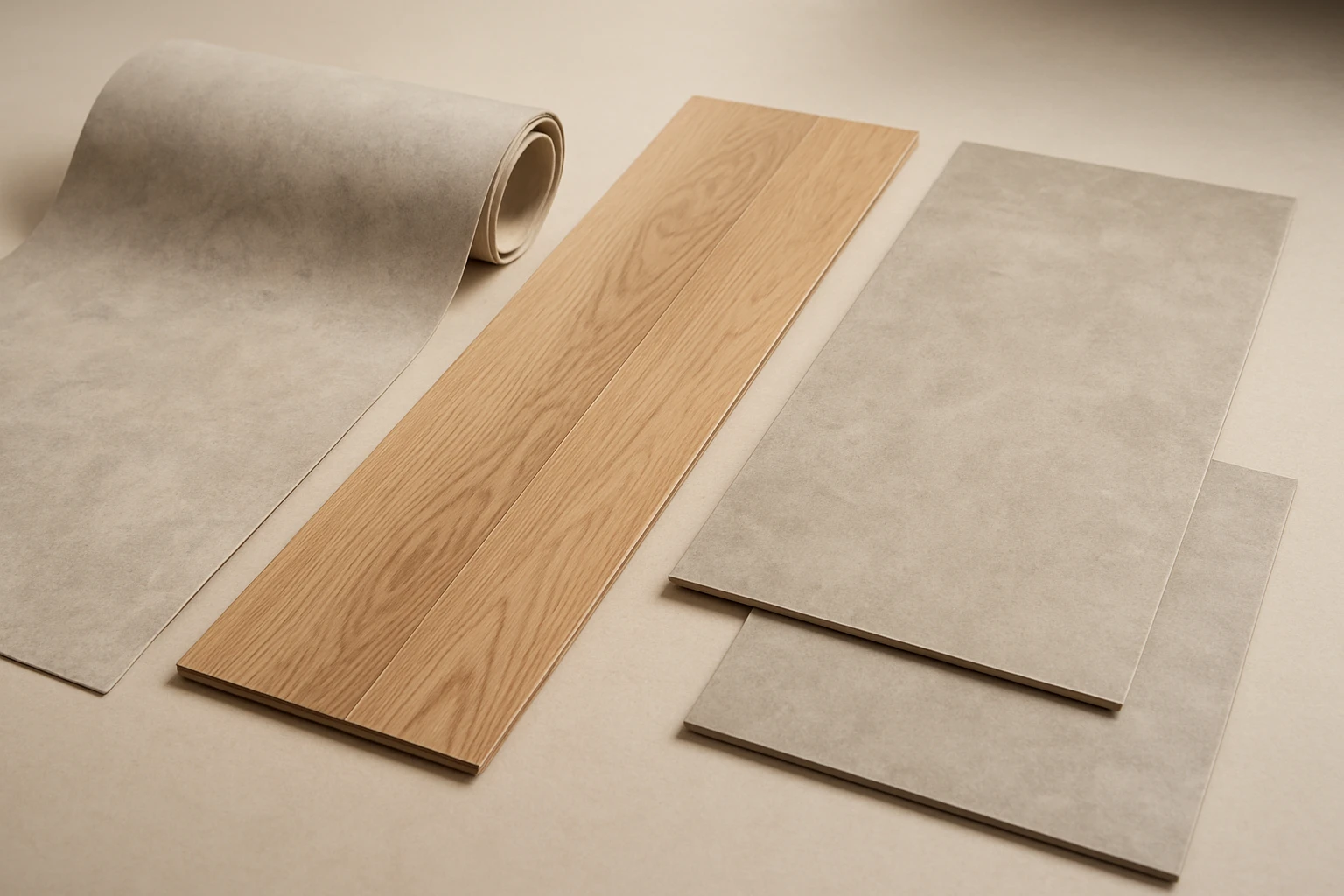
Vinyl sheet comes in rolls and usually costs less, while vinyl plank comes in narrow boards and is a good choice for a wood-look floor. Vinyl tile comes in separate squares or rectangles and suits stone or concrete designs, with damaged pieces often easier to replace than sheet flooring. When comparing vinyl sheet vs vinyl plank vs vinyl tile, the best choice depends on the room, the floor underneath, the fitting method and the product’s wear layer, not the shape alone.
How Do Vinyl Sheet, Vinyl Plank and Vinyl Tile Compare?
Vinyl sheet, plank and tile are three formats of vinyl flooring, but their shape does not tell you everything about their quality. A well-made sheet floor can suit a busy home better than a cheap plank, while a thick plank can still have a thin surface that wears poorly.
At Floors Land, compare samples by how they are made and fitted as well as how they look. The table below gives you a useful starting point before you look at individual products.
| Feature | Vinyl Sheet | Vinyl Plank | Vinyl Tile |
|---|---|---|---|
| Format | Large flexible rolls cut to fit | Narrow boards, often with a wood look | Squares or rectangles, often with a stone look |
| Common Installation | Full glue-down or approved loose-lay method | Click-lock, glue-down or approved loose-lay | Glue-down, click-lock or self-adhesive |
| Main Strength | Broad coverage with few joints | Wood-like layout and several fitting options | Stone-style layouts and piece-by-piece repairs |
| Main Limitation | Large cuts and repairs need care | Joints can move or fail if fitted poorly | More joints, with alignment easy to notice |
| Water Consideration | Few joints reduce possible entry points | Joints and edges still need protection | Joints and edges still need protection |
| Repair | Patches can show; larger replacement may be needed | Individual replacement may be possible | Individual replacement may be possible |
| Typical Feel | Cushioned versions feel soft underfoot | Rigid versions feel firmer | Depends on the backing and core |
| Best Starting Point | Budget rooms and low-joint layouts | Living rooms, bedrooms and wood-look interiors | Kitchens, entrances and stone-look interiors |
Vinyl plank flooring is often called LVP, meaning luxury vinyl plank. Luxury vinyl tile, or LVT, usually describes the tile format, though some suppliers use LVT as a wider name for both planks and tiles. Our LVT vs vinyl flooring comparison explains this overlap.
Also check what a seller means by vinyl tile. Luxury vinyl tile is not the same as vinyl composition tile, or VCT, which is common in commercial buildings and often needs a different care routine. Low-cost peel-and-stick tiles are another separate option, and how well they last depends heavily on a clean, smooth base.
What Does Each Vinyl Flooring Type Cost in Dubai?
Vinyl sheet is usually the cheapest material, while vinyl plank and luxury vinyl tile tend to cost more. The final bill can change that order because floor preparation, sheet waste and complex layouts can outweigh a small difference in the price per square metre.
These are rough budget ranges in UAE dirhams, not a current quote. Prices vary by supplier, brand, product grade, location and project size.
| Cost Item | Approximate Budget Range | What to Check |
|---|---|---|
| Vinyl Sheet Material | Around AED 25 to 70 per square metre | Backing, wear layer, roll width and waste |
| Vinyl Plank Material | Around AED 40 to 120 per square metre | Core type, wear layer and fitting system |
| Luxury Vinyl Tile Material | Around AED 40 to 130 per square metre | Tile size, surface finish and product grade |
| Basic Fitting on a Ready Base | Roughly AED 15 to 35 per square metre | Whether adhesive, trims and furniture moving are included |
| Floor Repairs and Levelling | Priced after inspection | Cracks, moisture, old adhesive and uneven areas |
Premium products and difficult work can cost more than these ranges. Confirm whether VAT, delivery, old-floor removal, skirting and door trimming are included, and compare itemised quotes rather than headline rates.
For example, a 20-square-metre room using material priced at AED 60 per square metre has a base material cost of AED 1,200. If the layout needs 10 percent extra, the material allowance becomes AED 1,320 before fitting and other work. This is an example, not a fixed waste allowance.
Sheet flooring needs a different calculation because you buy cuts from a fixed-width roll. A narrow room can still create a large offcut if its width does not suit the available roll, so ask for a cutting plan before assuming sheet is the cheapest choice.
For a wider view of preparation and fitting charges, see how much flooring costs in Dubai.
Which Vinyl Floor Handles Water Best?
Vinyl sheet has fewer joints, which can make it a useful choice where spills are common. No vinyl format should be treated as a complete waterproof floor system unless the whole installation, including edges, joints and openings around pipes, is approved for that use.
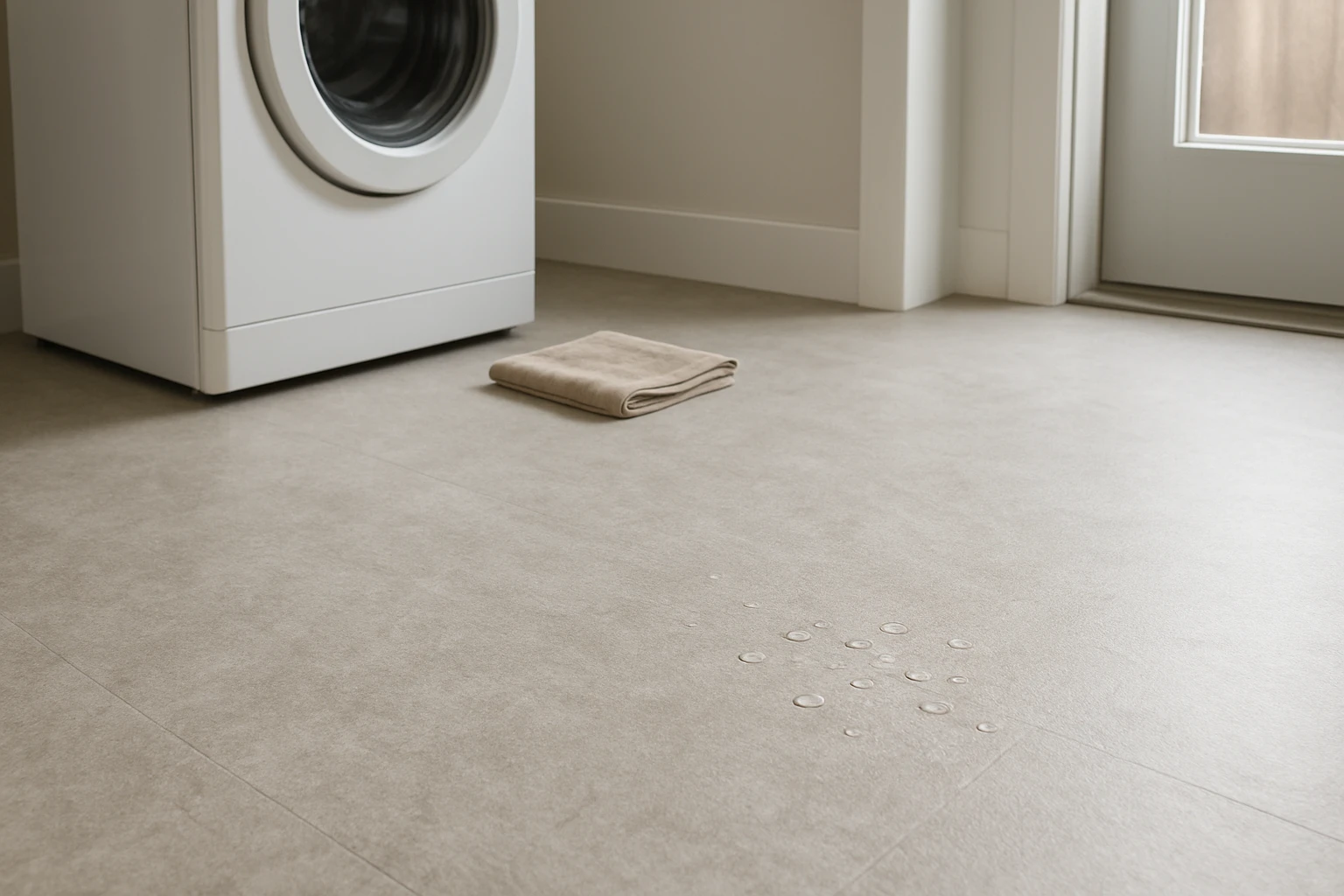
A waterproof plank may resist damage to its own core, but water can still reach the base through gaps at the walls, doorways or damaged joints. Water trapped below the floor can affect adhesive, encourage mould or damage nearby materials without making the vinyl itself swell.
Sheet flooring reduces the number of joints, but the edges still matter. A poorly finished cut around a toilet or pipe can let water underneath, and a joined sheet floor is only as reliable as the way its seams are sealed.
Follow these room-specific guidelines when comparing products:
- Kitchens: All three formats can work if the product is approved for kitchens, spills are wiped up and the base is dry.
- Bathrooms outside the shower: Check the exact product and fitting instructions, including edge treatment and any local requirements.
- Shower floors and wet rooms: Do not use ordinary domestic vinyl just because its packaging says waterproof. These areas need an approved wet-room system, suitable slopes, drainage and specialist fitting.
- Rooms with a history of leaks: Repair the leak and test the base before covering it. New flooring does not fix damp beneath it.
In Dubai apartments, a leak from a washing machine or nearby bathroom can spread below a floating floor. Access for repairs and a sound plan to manage moisture matter more than choosing by a waterproof label alone.
How Do Installation and the Existing Floor Affect the Choice?
The condition of the base can matter more than the choice between sheet, plank and tile. Thin vinyl follows small surface flaws, while rigid click flooring can bridge some shallow marks but still needs a flat, stable base.
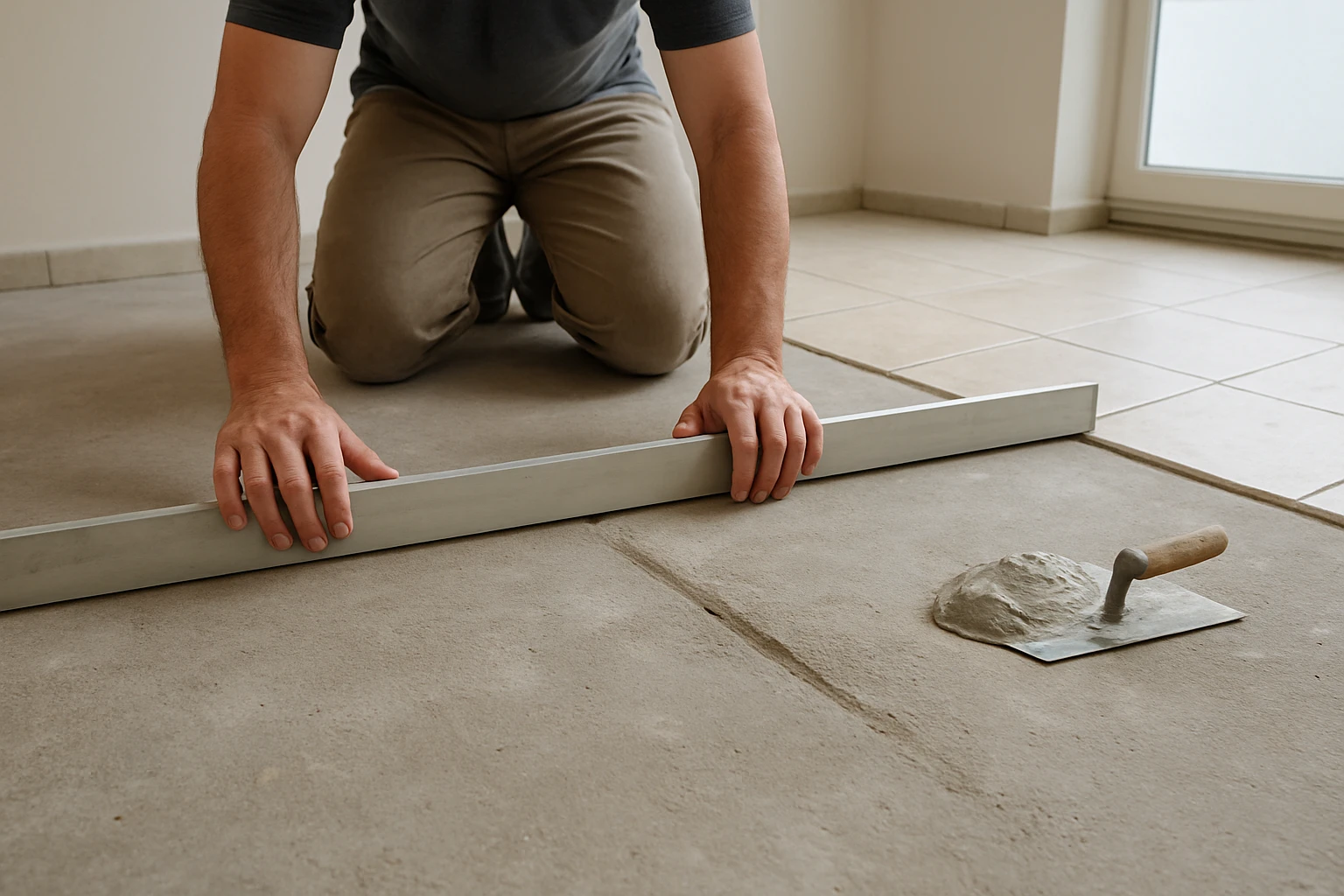
Sheet and Glue-Down Vinyl Need a Smooth Base
Sheet vinyl and thin glue-down planks or tiles can show grout lines, ridges and old adhesive through their surface. This is called telegraphing, which means marks in the base become visible in the finished floor.
Fitting vinyl over ceramic tiles may be possible, but loose tiles need repair and grout lines often need filling or a suitable smoothing layer. Laying fresh vinyl straight over deep grout joints can leave a grid pattern that becomes clearer under side lighting.
Glue-down flooring also needs the right adhesive for the product and base. Too much moisture, dust or adhesive used at the wrong stage can lead to lifting edges and a weak bond.
Click Flooring Needs Flatness and Space to Move
Click vinyl uses interlocking edges, and it normally floats above the base rather than being stuck to it. If the base has dips, each step can flex the joints until they weaken, open or break.
Follow the manufacturer’s exact flatness limits and expansion-gap instructions. Flat is not the same as level: a floor can slope gently yet still be flat enough, while a level floor with small humps can cause trouble.
Do not add a soft underlay unless the product allows it. Extra cushioning beneath a plank with an attached pad can create too much movement at the joints. Fixed cabinets can also trap a floating floor, so confirm the order of work before fitting a kitchen.
Dubai Heat and Floor Height Need Early Checks
Strong sun through large windows can heat the floor surface even in an air-conditioned home. Check the product’s limits for direct sunlight and temperature changes, and keep the room within its required conditions during storage and fitting.
Also measure the total height of the flooring and any layers beneath it at doors, balcony tracks and appliances. A thicker rigid plank may be easy to fit across the room but leave too little space to open a door or remove a dishwasher later.
If you are comparing core types as well as formats, our SPC vs laminate vs vinyl flooring comparison explains the differences. SPC means stone plastic composite, a rigid core used in some vinyl planks and tiles. It is not a fourth flooring shape.
Which Is More Durable, Comfortable and Easy to Repair?
Durability depends on the wear layer, surface finish, core, fitting and use, not simply whether vinyl comes in a sheet, plank or tile. Planks and tiles usually make small repairs easier, while cushioned sheet vinyl can feel softer during long periods of standing.
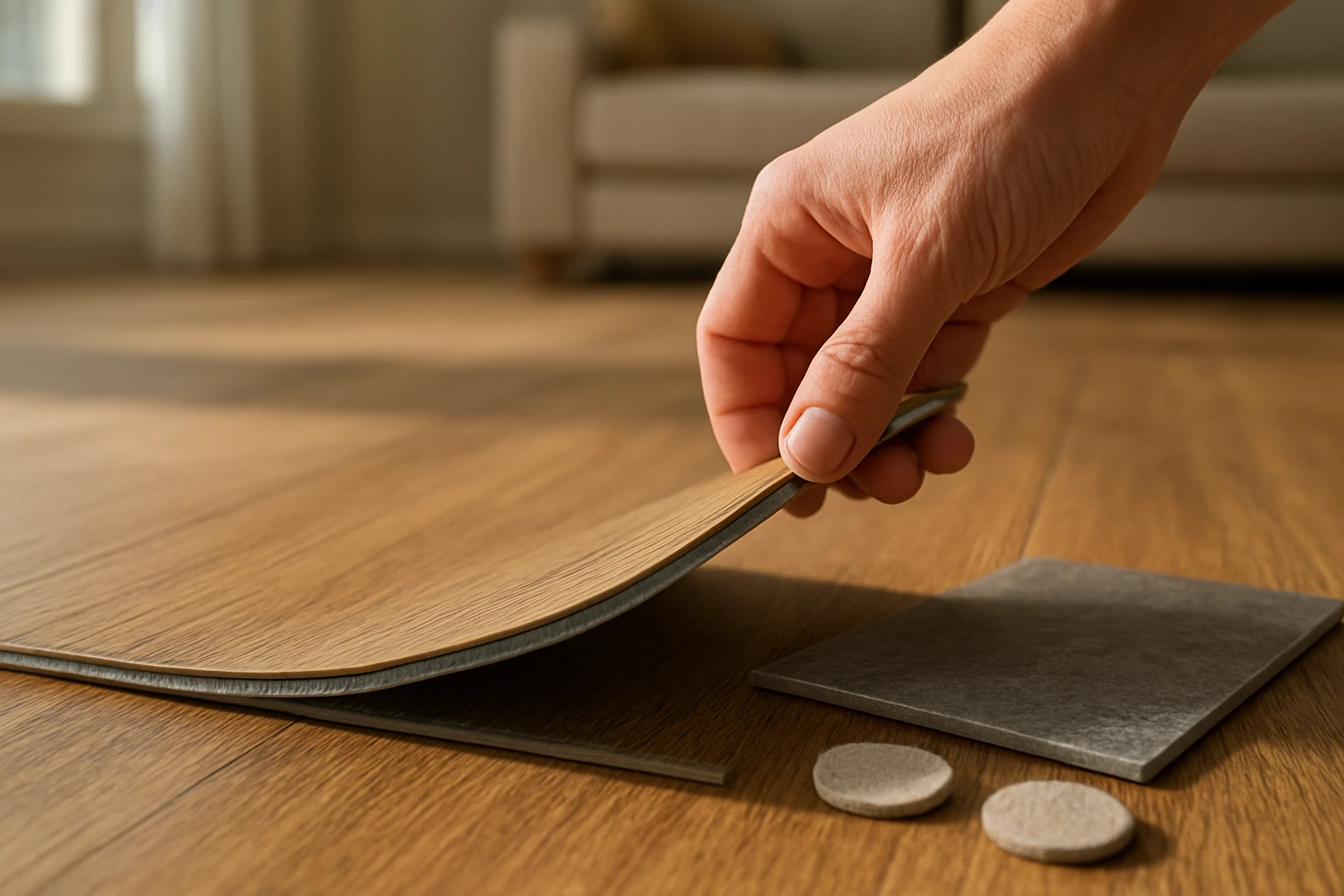
Wear Layers Matter More Than Overall Thickness
The wear layer is the clear protective layer above the printed design. Product details often list wear layers such as 0.3 mm and 0.55 mm, but the right choice still depends on the product’s use rating and warranty terms.
For a busy family room, compare the wear layer, scratch-resistant finish and home use rating together. A thicker wear layer can withstand more wear, but it does not make a floor scratch-proof or stop a sharp object from cutting it.
Overall thickness serves a different purpose. A thick core can affect feel, height and joint design, but a thick plank with a thin wear layer is not automatically tougher than a thinner product rated for commercial use.
Repair Access Can Change the Best Choice
A damaged glue-down tile or plank can often be removed and replaced without lifting the whole floor. The installer still needs to remove old adhesive carefully, and the new piece may look different if the surrounding floor has faded or the batch colour has changed.
Replacing a click plank in the middle of a room may require taking the floor apart from a wall. Some products allow a specialist cut-out repair, but the method must suit the joint design and warranty.
Sheet vinyl can be patched, though the cut edges may remain visible, especially in a plain design. Keep spare material from the same batch in a suitable storage space, because finding a close match years later can be difficult.
Comfort and Sound Depend on the Whole Floor
Cushioned sheet can feel softer under bare feet, while rigid planks usually feel firmer. Neither shape alone tells you how much sound reaches the apartment below, because the backing, underlay and building structure all play a part.
Ask for sound test results for the complete floor system if your building has noise rules. A claim that a sample feels quiet underfoot is not proof that it meets those rules.
For all three formats, remove grit, use felt pads and protect the floor from chair wheels and heavy loads on small areas. Follow the maker’s cleaning instructions, and avoid steam cleaning unless the product specifically permits it.
Which Vinyl Format Suits Each Room and Design?
Vinyl plank is usually the most natural starting point for a wood-look living space, while luxury vinyl tile suits stone-style layouts. Sheet vinyl works well when fewer joints, a softer feel or a lower material budget matters more than individual board edges.
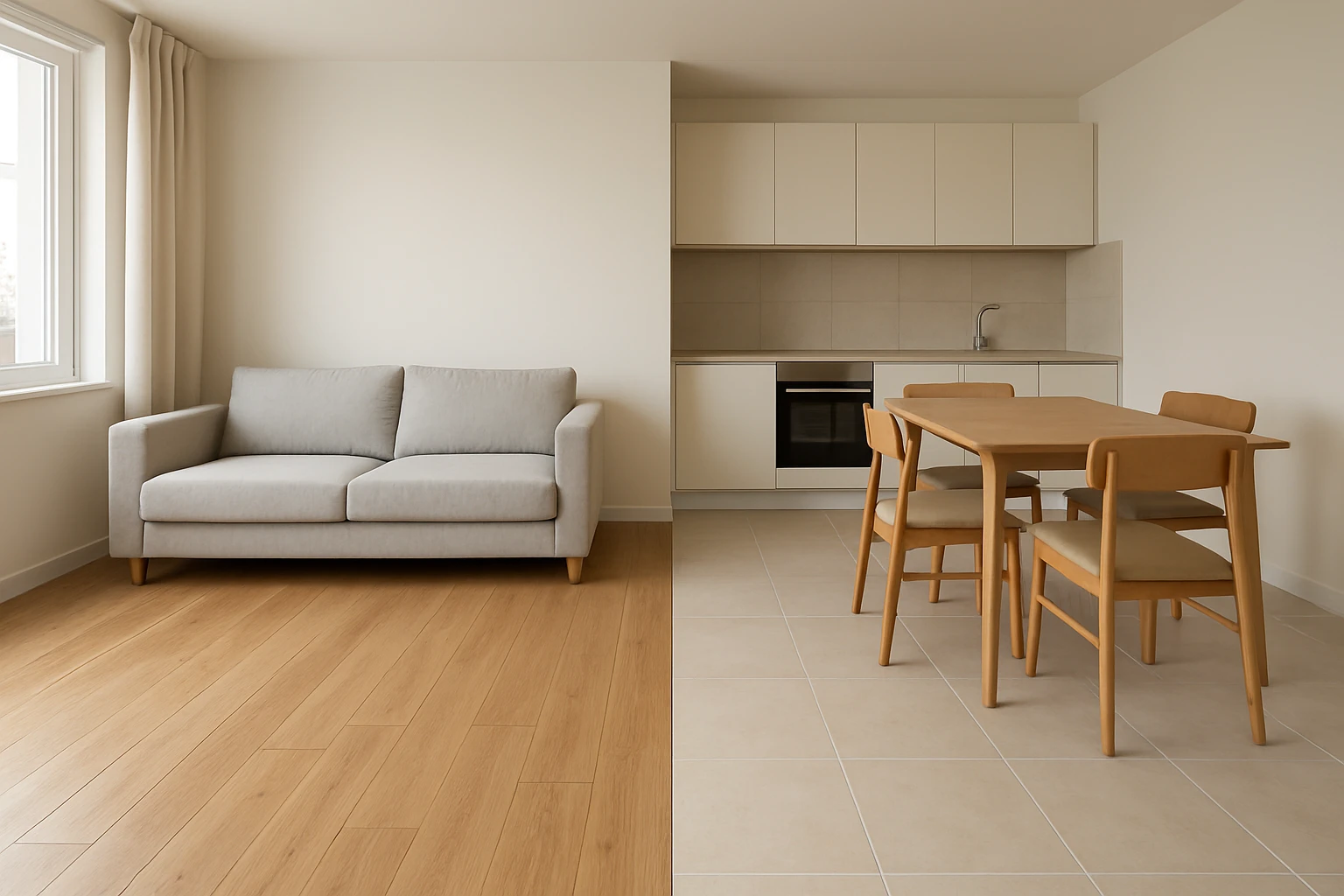
| Room or Priority | Best Starting Point | Reason and Main Check |
|---|---|---|
| Bedroom | Cushioned sheet or vinyl plank | Choose softness or a wood look, and compare the feel on a firm base |
| Living Room | Vinyl plank | Board lines suit wood designs; check sunlight limits near large windows |
| Kitchen | Vinyl tile, plank or sheet | All can work; check water guidance, appliance access and cabinet details |
| Busy Entrance | Rated luxury vinyl tile or plank | Check wear rating and use a suitable mat to reduce grit |
| Utility Room | Sheet vinyl or approved glue-down vinyl | Few joints or a bonded floor may help, but leaks still need prompt action |
| Rental Property | Sheet for initial cost, or glue-down pieces for repairs | Compare replacement costs, access and expected use |
| Stone-Look Interior | Luxury vinyl tile | Individual tile edges can give a more convincing layout |
A small sample can hide repeated prints, so view several planks or tiles together before ordering. Strong knots or dark marks can look natural once but distracting when they repeat across a small room.
Floor texture and edge shape also affect the result. Deep bevels, which are small grooves along the edges, make each plank stand out but can collect dirt. A heavily textured surface can disguise light marks, though it may take more effort to clean than a smoother finish.
For a narrow hallway, try a loose layout before choosing the board direction. Running planks along the hall often looks calm, but the best direction should also avoid awkward narrow strips at doorways and suit the adjoining rooms.
How to Choose Between Vinyl Sheet, Plank and Tile
Choose vinyl sheet for value and fewer joints, vinyl plank for a wood-look layout, and vinyl tile for a stone-style floor with separate replaceable pieces. Then check the exact product against the room’s needs, because a suitable format with the wrong fitting system can still be a poor purchase.
Before you approve an order, follow this sequence:
- Inspect the base. Ask what repairs, moisture checks and smoothing work are needed, and have those costs listed separately.
- Choose the fitting method. Compare glue-down and click options based on floor height, repair access, fixed furniture and building rules.
- Check the product details. Review the wear layer, room suitability, sunlight limits, cleaning guidance and warranty exclusions.
- Confirm the layout and quantity. Ask how roll widths, board direction, pattern matching and waste affect the order.
- Compare the full fitted price. Include trims, preparation, delivery, VAT and removal rather than choosing by material price alone.
- Keep spare material. Confirm the batch and store spare pieces as the manufacturer directs.
A budget utility room may suit sheet vinyl, a sunlit living room may suit an approved plank product, and a kitchen with a stone design may suit glue-down luxury vinyl tile. None is best for every home, so compare the actual vinyl flooring options with the room’s conditions before making the final choice.
Frequently Asked Questions
Can I Put Vinyl Flooring on Stairs?
Some vinyl flooring can be fitted on stairs, but it needs an approved method and suitable stair nosings. A floating click floor should not simply be continued onto the steps. Check the product guidance for full bonding, edge protection and slip resistance, because a loose edge on a stair creates a fall risk.
Is Vinyl Sheet the Same as Linoleum?
Vinyl sheet and linoleum are different materials, even though both can come in rolls. Vinyl uses a plastic-based construction, while linoleum is made mainly from ingredients such as linseed oil, wood flour and mineral fillers on a backing. Their fitting and care needs differ, so confirm the material rather than relying on appearance.
Can Vinyl Flooring Be Used with Underfloor Heating?
Many vinyl floors can be used with underfloor heating, but only within the product’s stated limits. The flooring, adhesive and underlay must all suit the heating system, and the permitted floor temperature matters. Ask for written compatibility guidance before buying, because excess heat can affect bonding, joints and appearance.
How Can I Check Vinyl Flooring for Indoor Air Quality?
Check for independent emissions testing that applies to the exact vinyl product you plan to buy. FloorScore is one recognised certification for flooring emissions, though certification does not mean a product has no emissions. Also check the adhesive and underlay, and follow the ventilation guidance during and after fitting.
Can Old Vinyl Flooring Contain Asbestos?
Some older vinyl tiles, sheet flooring backings and floor adhesives can contain asbestos. You cannot confirm this by looking at the floor, so avoid sanding, grinding or lifting suspect material before it has been assessed. If the age or history is unclear, arrange testing through a qualified local specialist before removal.