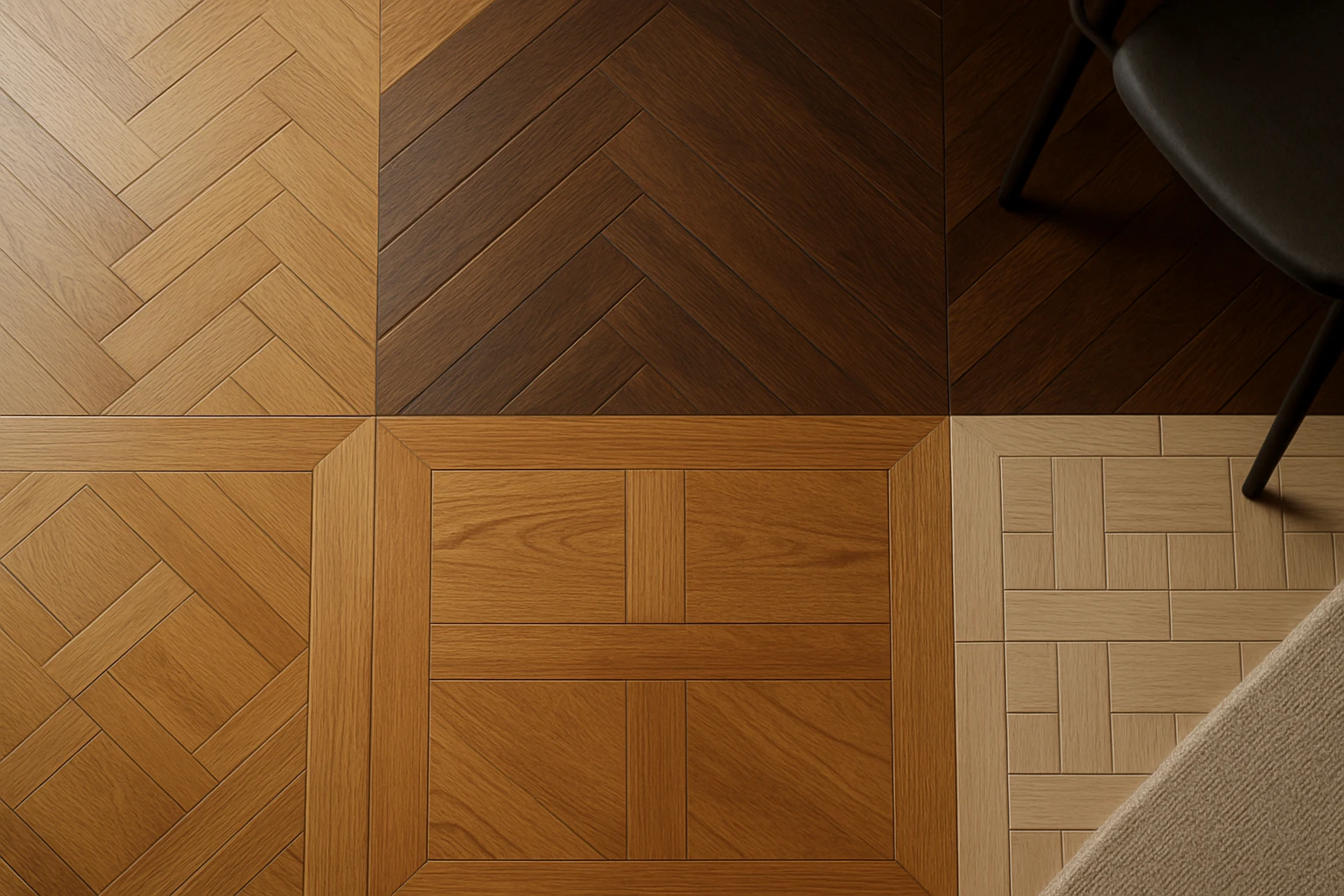
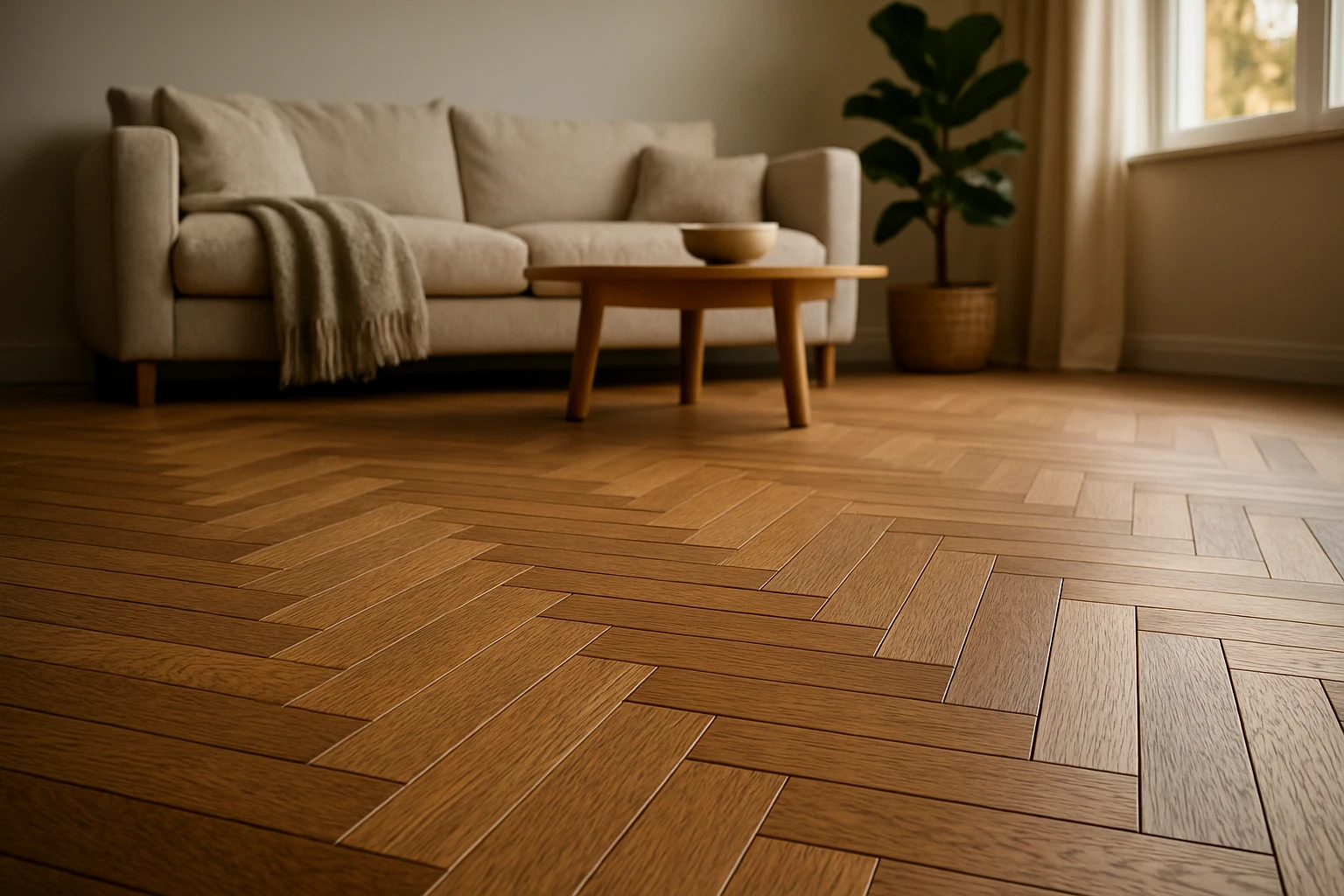
Parquet flooring arranges small wood pieces in repeating geometric layouts that add texture and movement to a room. The most common parquet flooring patterns are herringbone and chevron. Herringbone uses staggered rectangular planks to create a woven look. Chevron uses boards cut at an angle so the ends meet and form a continuous V. Each pattern changes how a room feels and how much work the installation requires.
Key Statistics
- Search interest for parquet patterns has grown steadily, with herringbone and chevron among the top three queries worldwide in the last five years.
- Typical installed cost range for wood parquet is USD 30 to 120 per square meter depending on species and pattern complexity.
- Herringbone installs usually take 15 to 25 percent longer than straight plank installs because of alignment and waste from cuts.
This article covers the major parquet patterns, how they compare, material choices, installation methods, realistic cost ranges, and simple maintenance steps. Floors Land walks you through practical choices so you can pick the pattern that fits your space and budget.
What Parquet Flooring Is
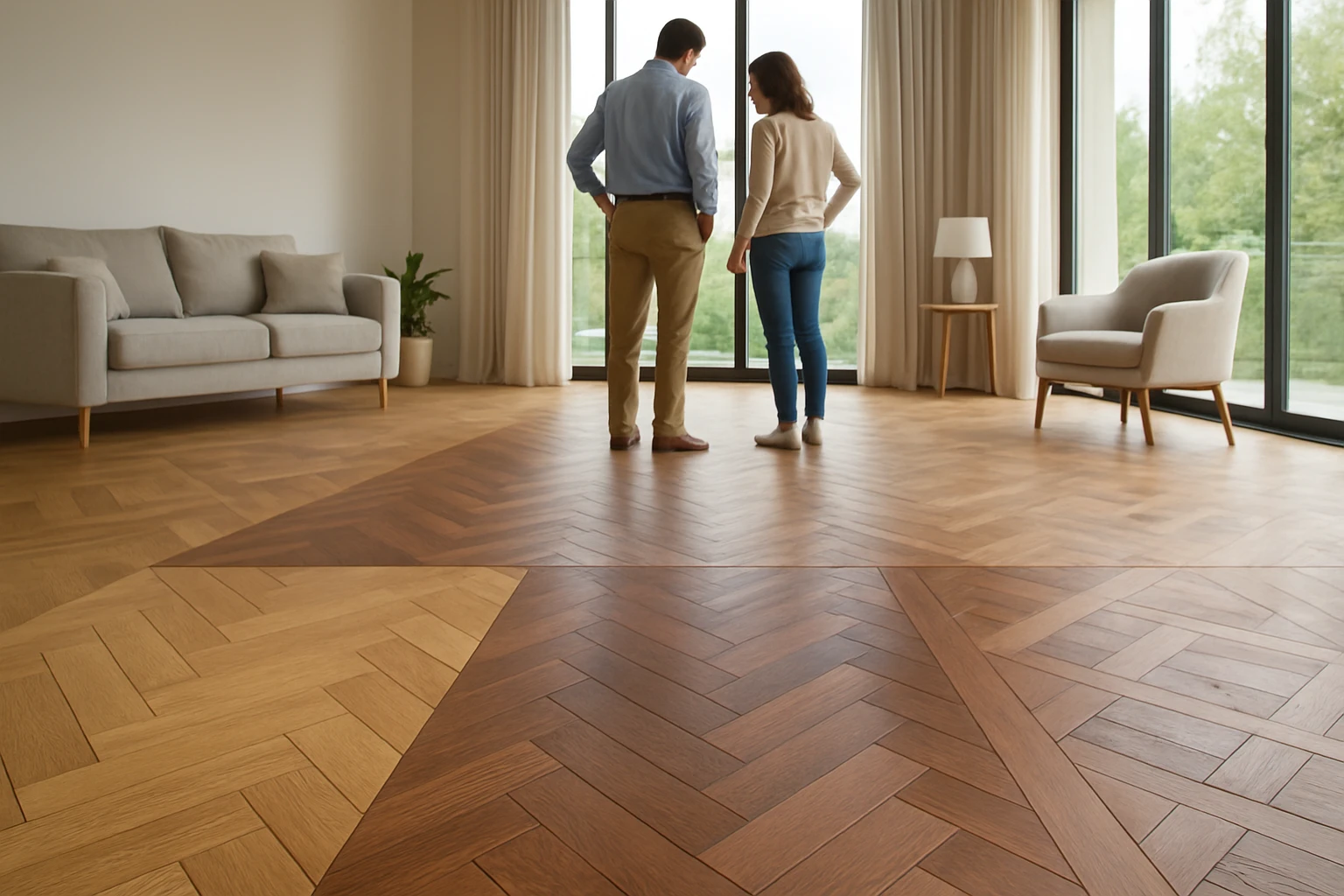
Parquet is a floor made from small wooden blocks or strips set into geometric patterns. Unlike long plank floors, the pattern itself is the main visual feature. Parquet can be solid wood or engineered wood, and it may be finished before or after installation.
Popular Parquet Patterns
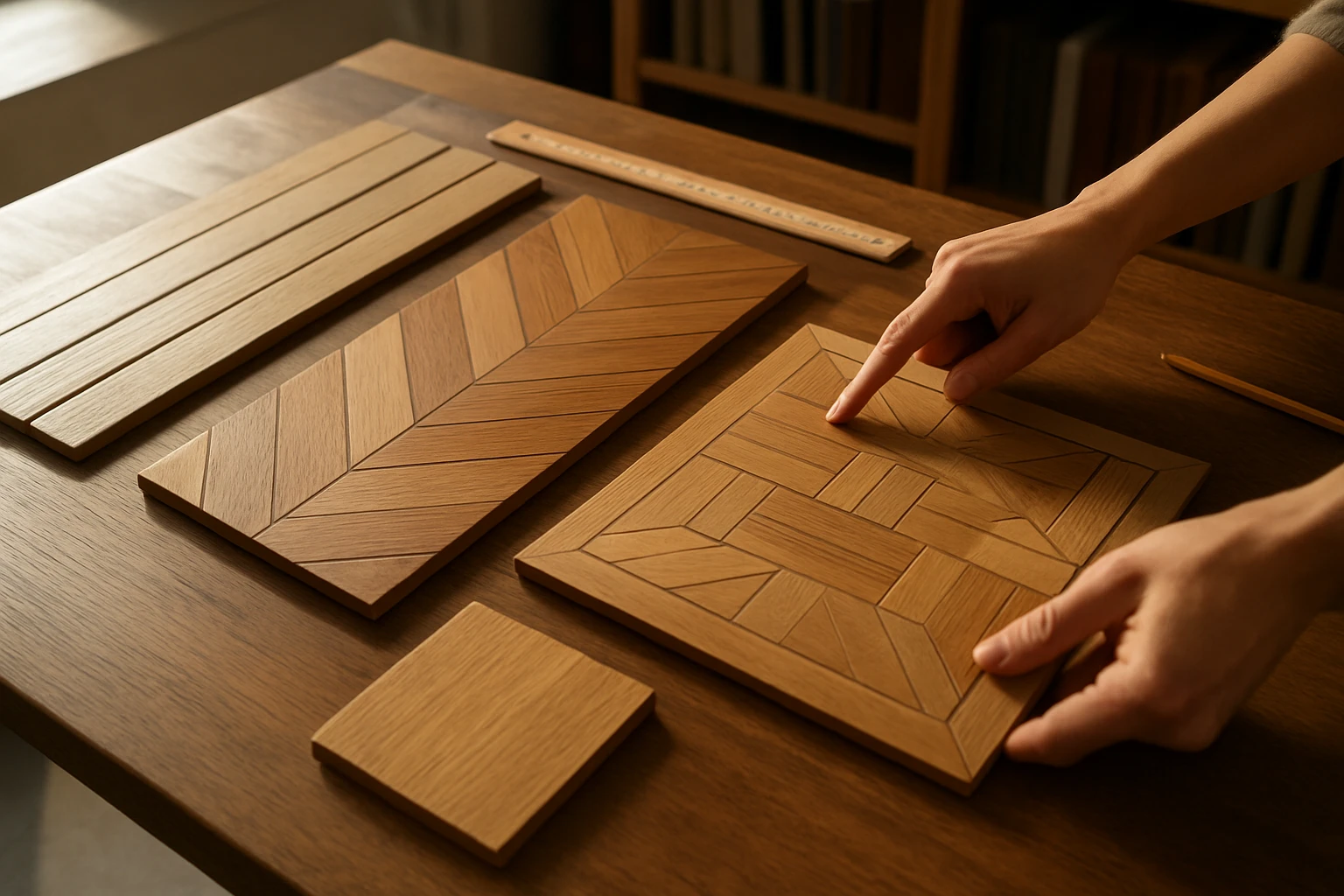
Parquet patterns range from simple repeats to complex panels, and each pattern gives a distinct look and scale. Below are the patterns homeowners and designers ask about most.
Herringbone
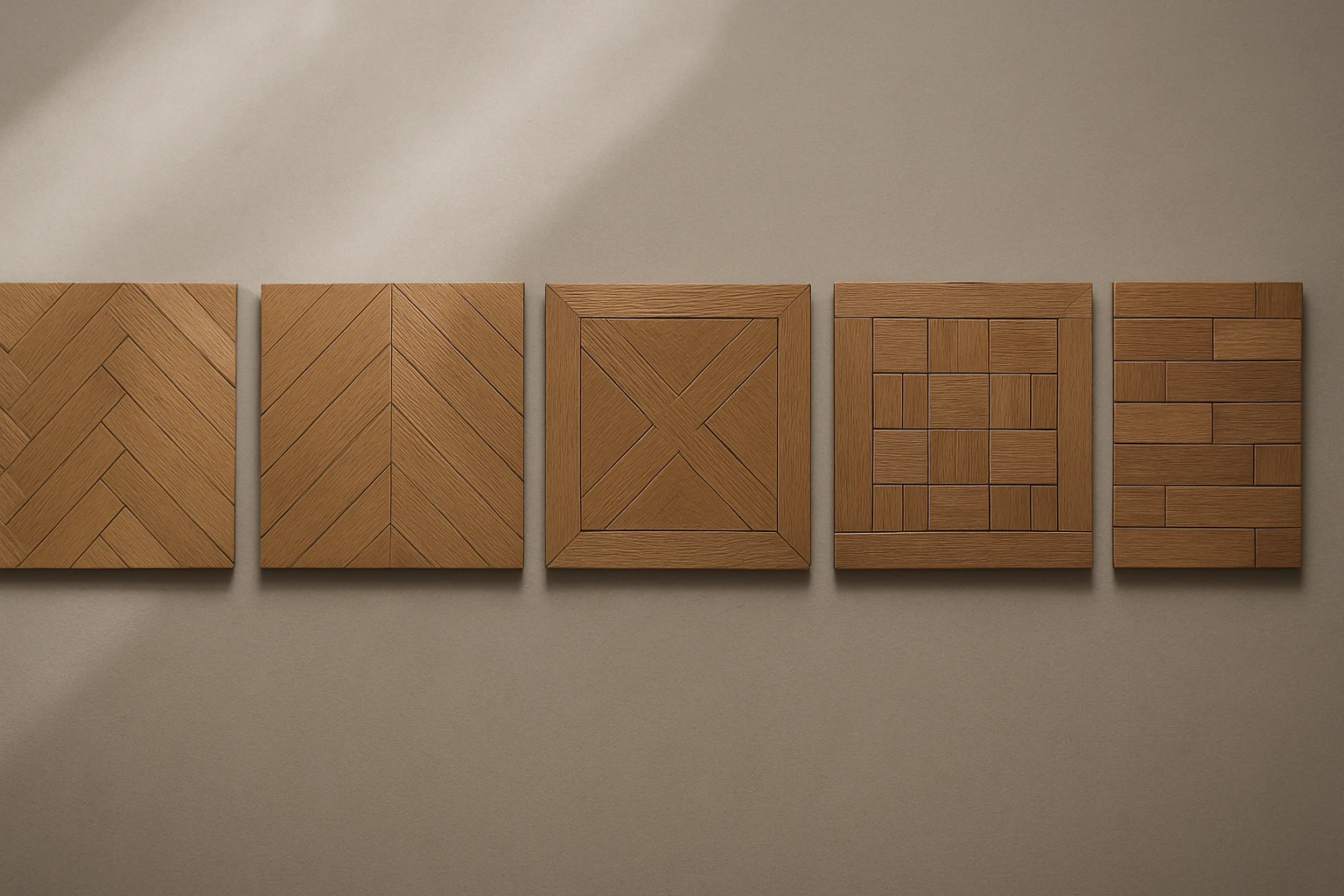
Herringbone uses rectangular planks placed end to side so each end meets the side of another plank. The result is a broken zigzag that reads as checked movement rather than a continuous V. It gives rooms a classic, tailored look and works well in both modern and traditional settings.
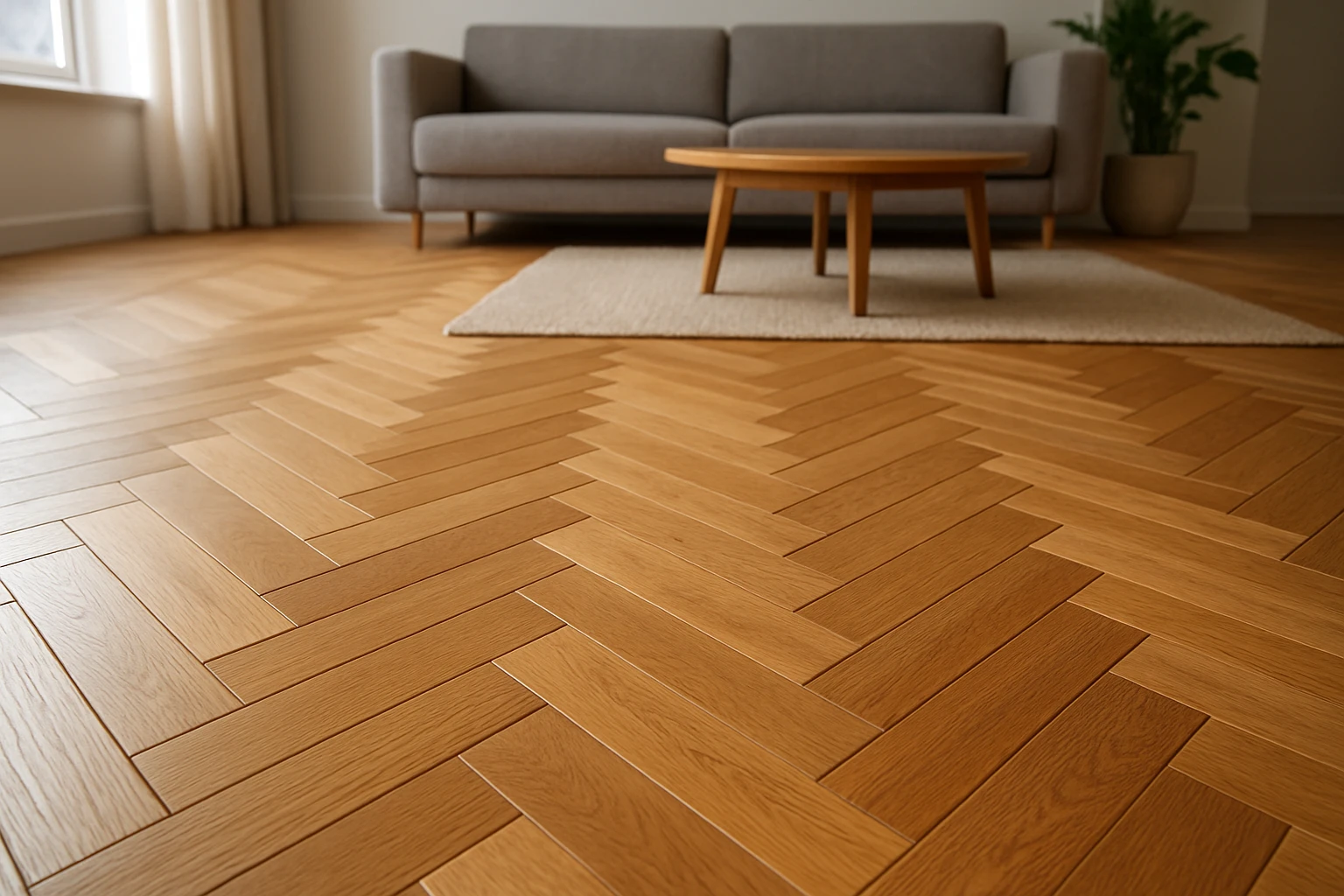
When to Use:
Herringbone is ideal for medium to large rooms where the pattern can be seen clearly. It helps make long spaces feel shorter and adds texture to otherwise simple rooms.
Visual Effect:
The staggered blocks create a subtle directional flow that reads as calm movement and draws the eye across the floor instead of down a single center line.
Chevron
Chevron uses boards cut at an angle so the short ends meet, forming a sharp V. The result is a strong directional line that can make a room look narrower or wider depending on the V orientation and plank width.
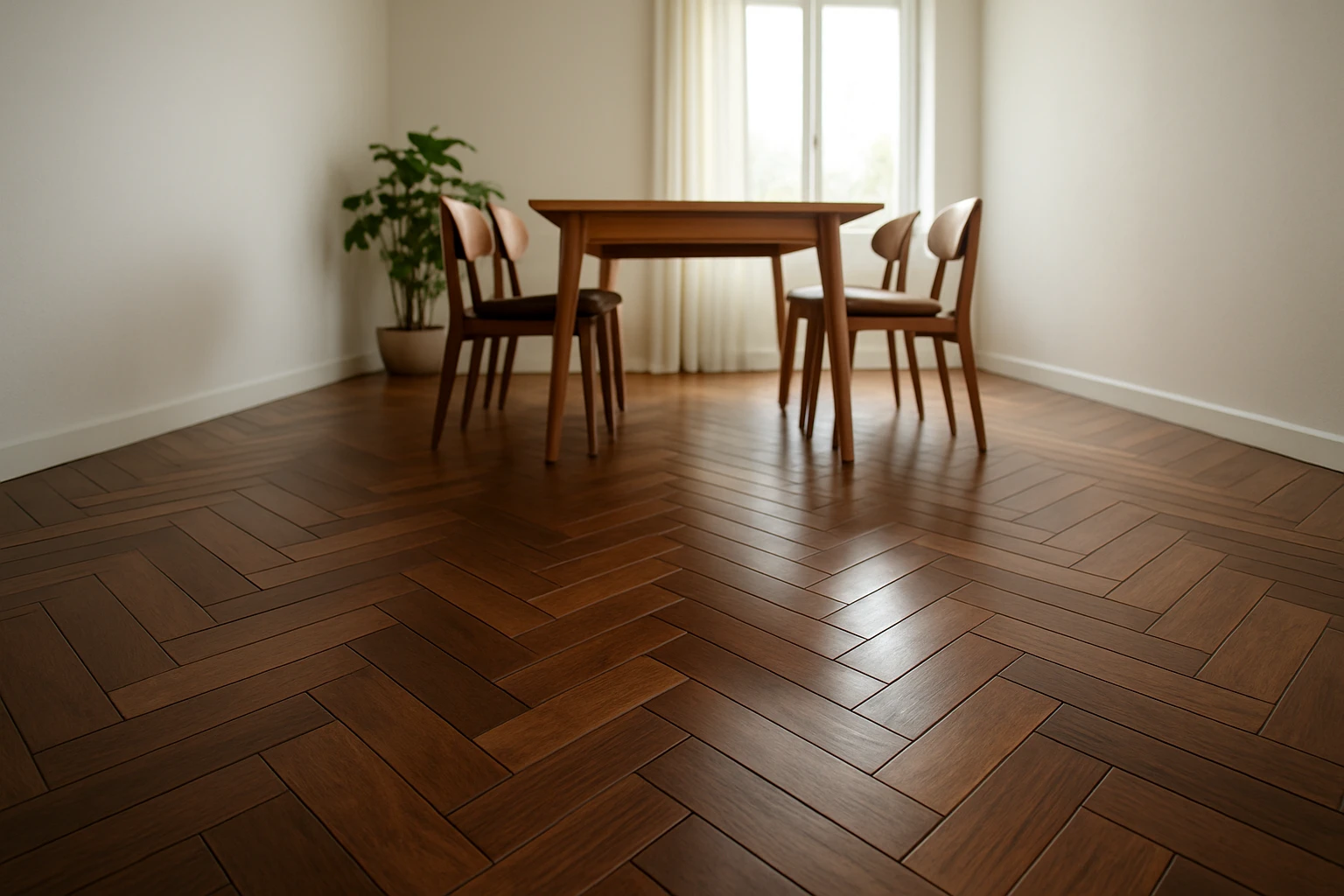
When to Use:
Choose chevron when you want a clear sense of direction. It suits hallways, long dining rooms, or spaces where a strong focal axis helps the layout.
Visual Effect:
Chevron makes a bold statement with clean V lines, and it reads as more formal and dynamic than herringbone.
Versailles Panel
Versailles panels are square or rectangular modules made of smaller wood pieces arranged within each module. This pattern creates a large-scale, ornate look that suits formal rooms and historic homes.
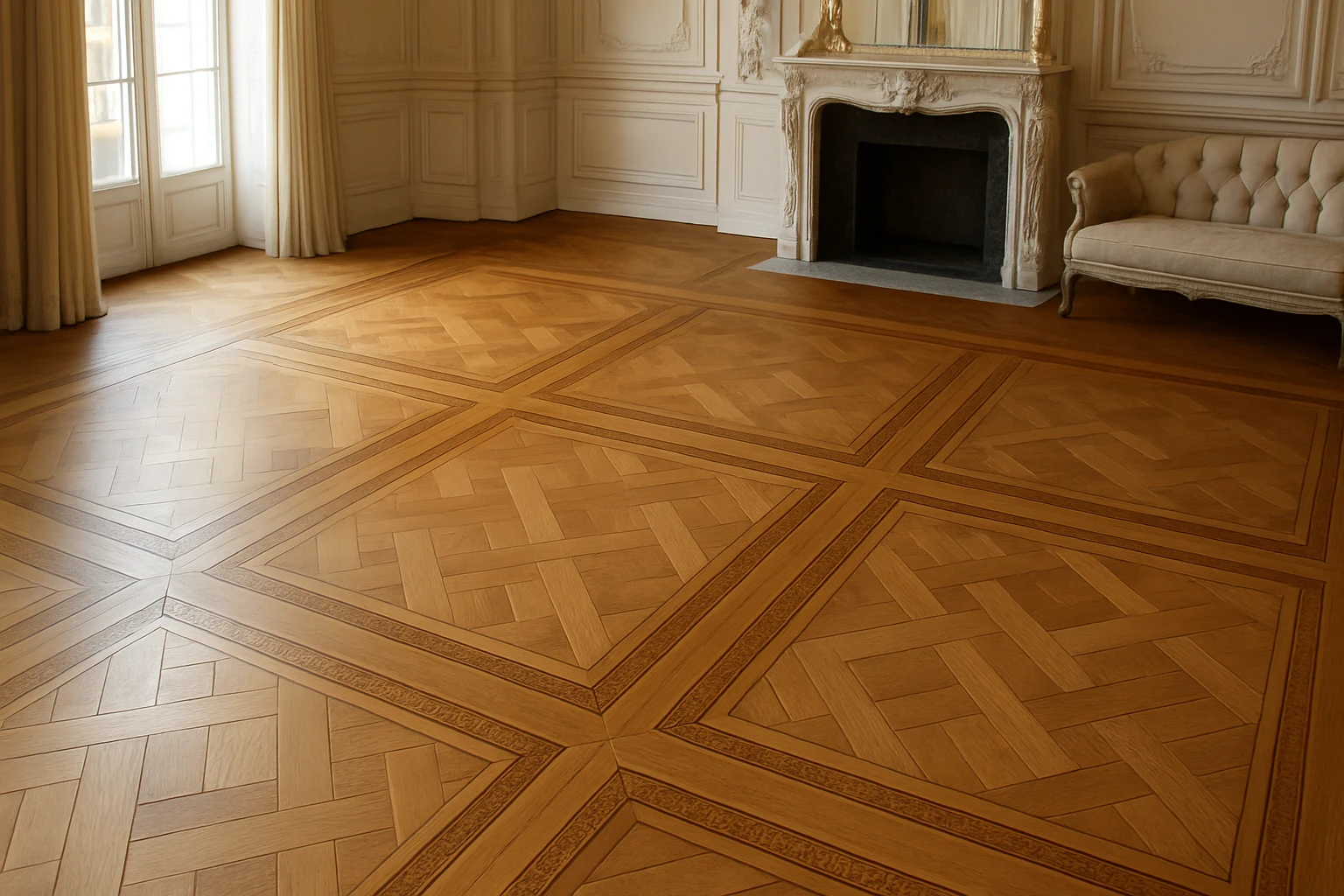
When to Use:
Use Versailles panels in larger formal spaces such as parlors or dining rooms where the pattern can be seen from multiple angles.
Visual Effect:
The repeating framed modules give a tiled, luxurious feel and make rooms appear more structured.
Basket Weave and Brick Patterns
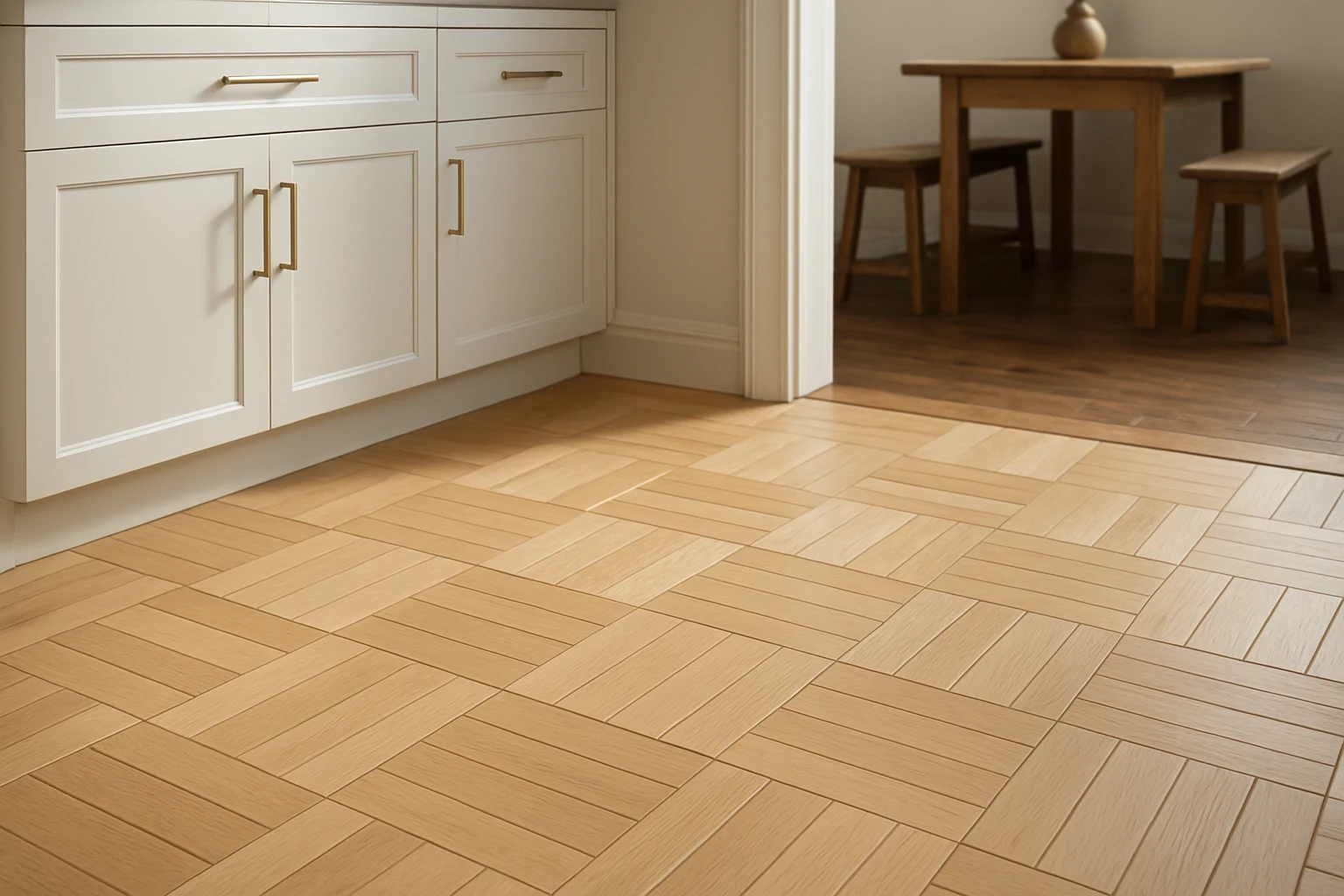
These patterns use short rectangular pieces to form woven or bricklike fields. They offer subtle texture and suit medium rooms without overpowering other design elements.
When to Use:
Basket weave fits kitchens and casual spaces, while brick patterns work well in rustic or industrial interiors.
Visual Effect:
Both patterns provide texture without strong directional lines, which helps when furniture placement needs to stay flexible.
Comparing Patterns at a Glance
A clear table helps compare look, best room types, cost factor, and installation difficulty so you can choose faster.
| Pattern | Visual Character | Best Rooms | Cost Factor | Installation Difficulty |
|---|---|---|---|---|
| Herringbone | Gentle zigzag, classic | Living rooms, hallways | Medium | Medium-High |
| Chevron | Sharp V lines, formal | Dining rooms, long halls | Medium-High | High |
| Versailles Panel | Large framed modules, ornate | Formal rooms | High | High |
| Basket Weave | Woven texture, casual | Kitchens, studies | Low-Medium | Medium |
| Brick | Staggered short planks | Rustic spaces | Low | Medium |
This table makes choices easier. Often pattern selection comes down to room scale and how much visual activity you want on the floor.
Materials and Wood Types
Parquet can be made from many woods and constructions, and each choice changes cost, durability, and look. Engineered parquet has a thin real-wood top layer over plywood, while solid parquet is solid wood all the way through.
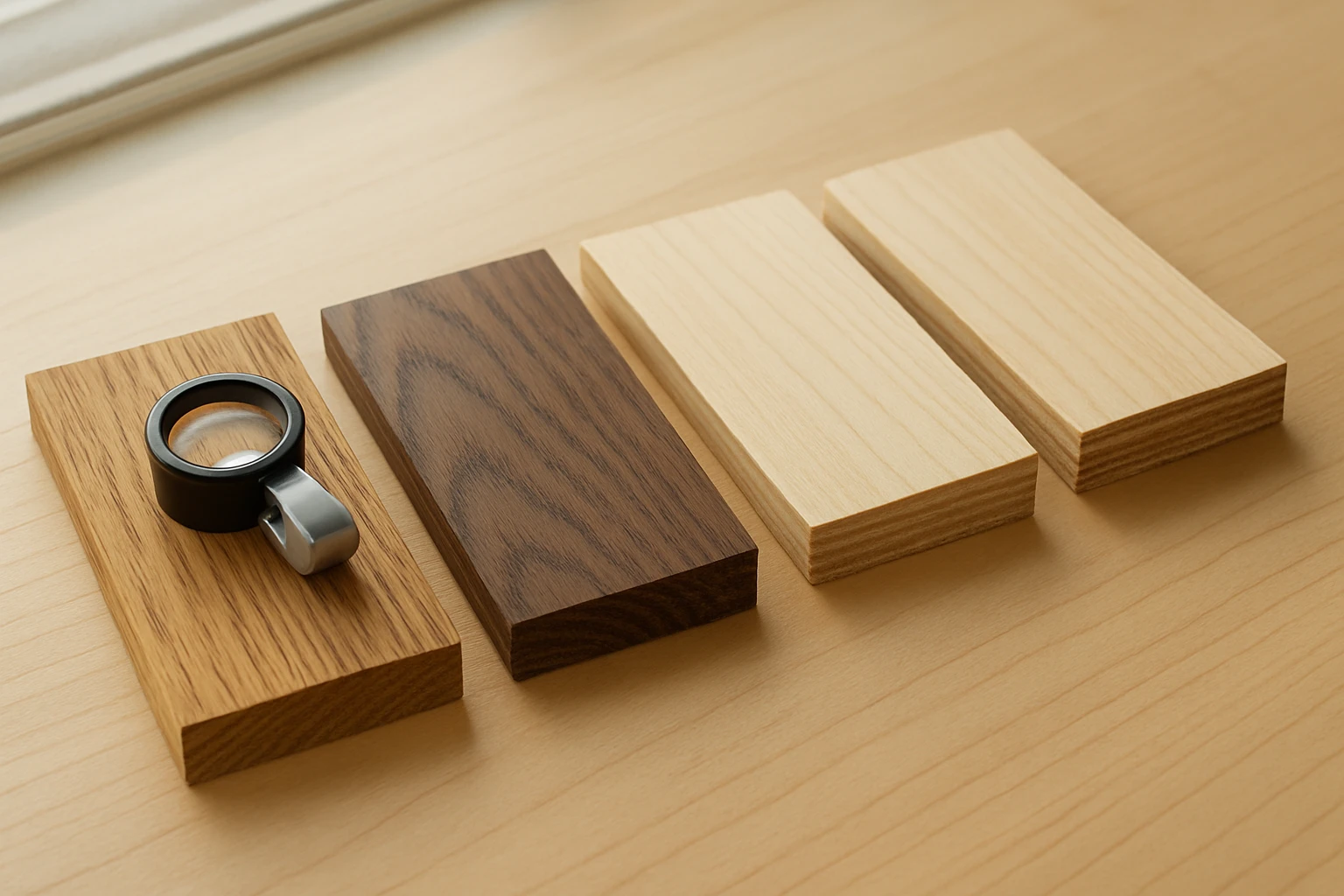
- Oak is the most common choice because it is stable and shows grain well.
- Walnut gives a rich, dark contrast that suits traditional patterns.
- Maple is pale and smooth and helps highlight the pattern geometry.
For more on core material choices and finished looks, see the Parquet Flooring page and the Wooden Flooring overview on the site. If you are considering non-wood options with a parquet look, Laminate Flooring offers budget-friendly patterned planks that mimic wood.
Installation Methods and Time
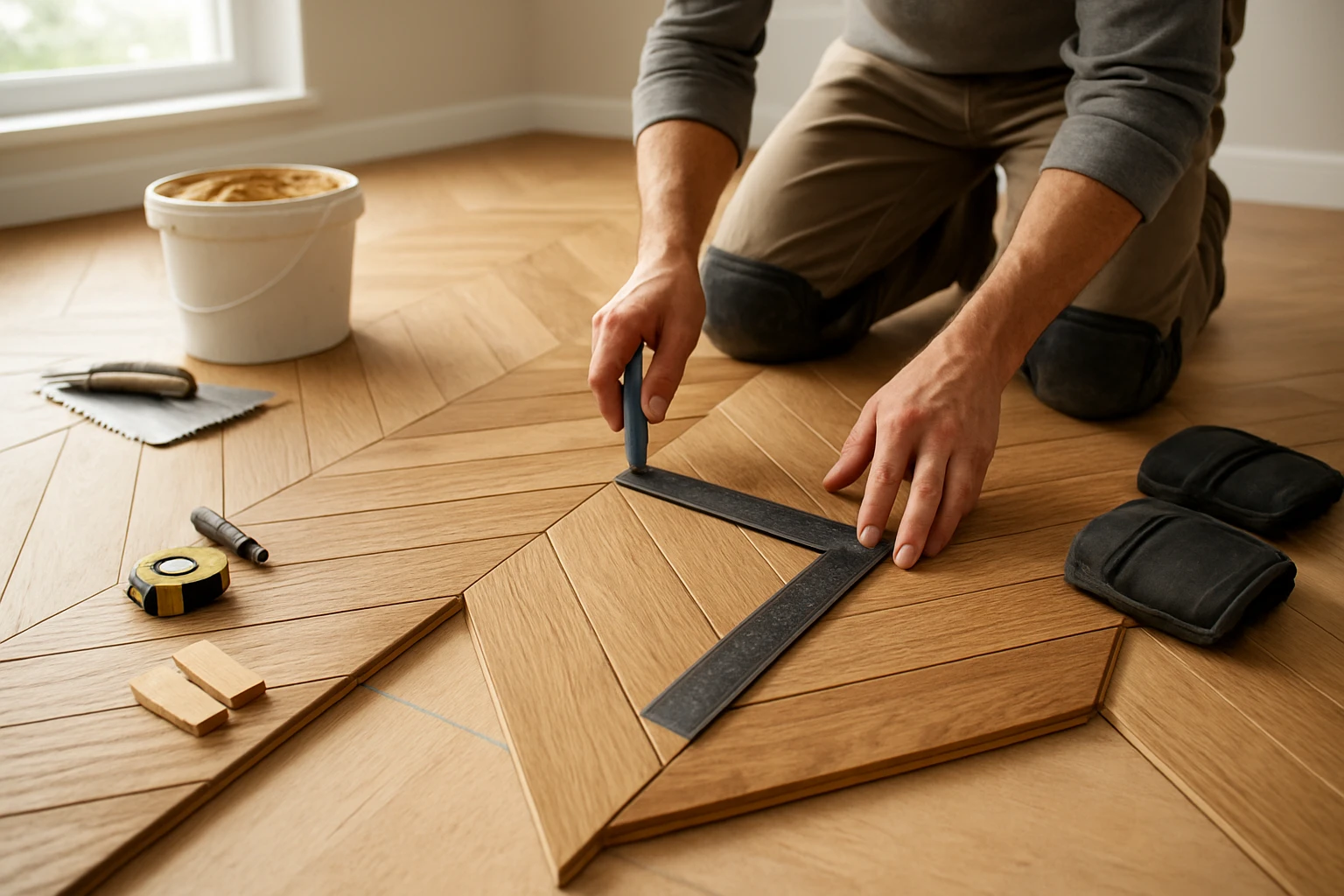
Installation varies by pattern and material. Common methods include glue-down, tongue-and-groove click systems, and full nail-down for solid wood. Patterned installs need extra layout time for alignment and squaring reference lines.
Glue-Down
Glue-down is common for engineered parquet and gives strong adhesion to the subfloor. It holds well and is often required for precise patterns like chevron.
Floating/Click Systems
Some engineered parquet and patterned laminate use click systems. These are faster to fit but may not suit heavy patterns that need glued seams for clean lines.
Tool Checklist:
- Chalk line and tape measure
- Quality adhesive or mallet for clicks
- Wet saw or miter saw for accurate angled cuts
- Moisture meter to check subfloor
Typical Time Frames:
- Herringbone: 1.2x the time of straight planks for layout and cutting.
- Chevron: 1.3x to 1.5x due to precise angle cuts.
- Versailles: 1.4x because modules must be centered and matched across the room.
Cost Comparison and Budgeting
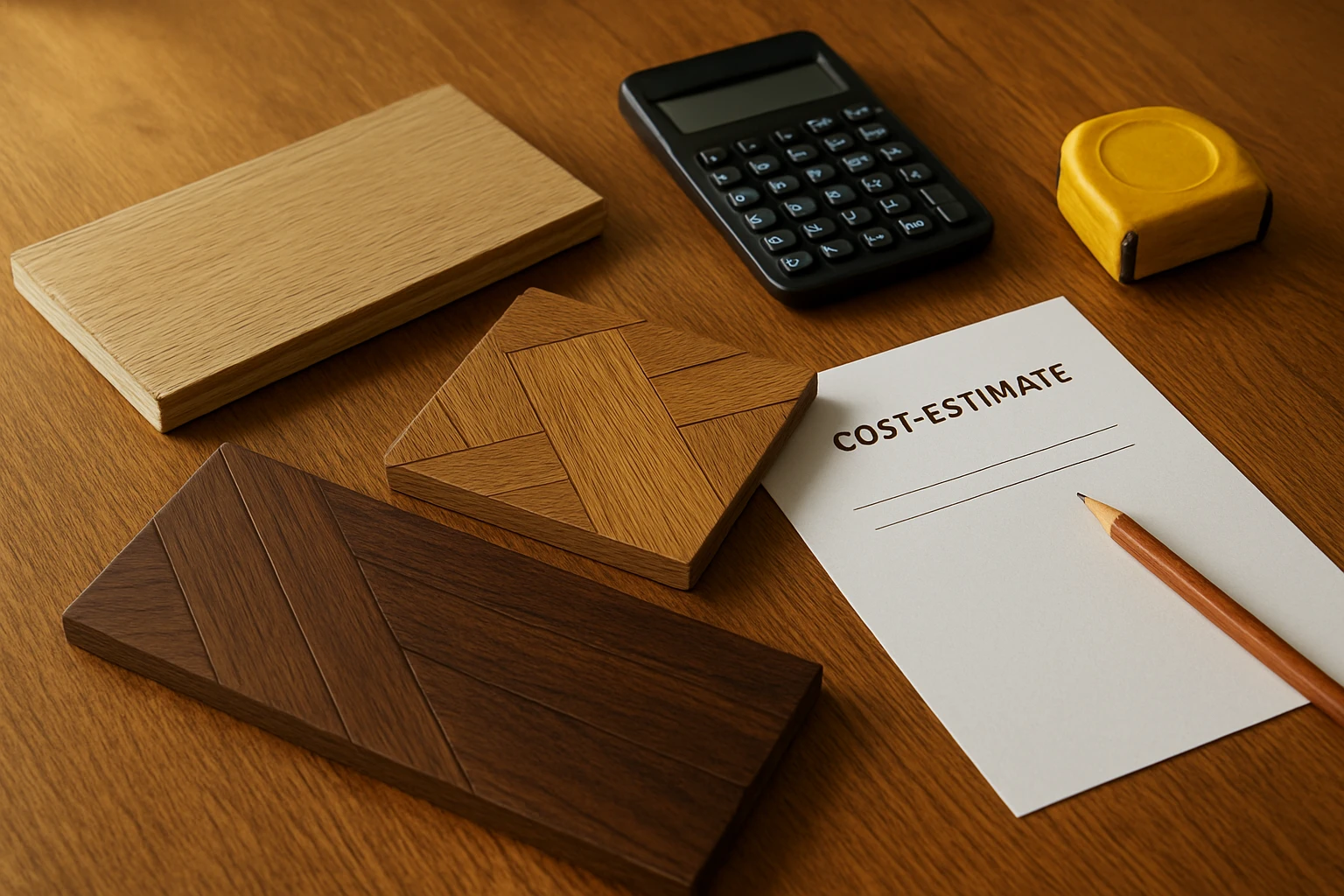
Costs vary with wood species, pattern complexity, and whether you use solid or engineered boards. Below is a conservative cost guide to help plan a budget. Local labor rates will change final pricing.
| Item | Low Range (USD/m2) | High Range (USD/m2) | Notes |
|---|---|---|---|
| Engineered Parquet (simple) | 30 | 60 | Oak or maple top layer |
| Engineered Parquet (complex pattern) | 50 | 90 | Extra cuts and time |
| Solid Parquet | 60 | 120 | Higher material cost, can be refinished |
| Installation Only | 10 | 50 | Varies by pattern and region |
For localized cost data, see the posts on pricing in the region such as How Much Does Flooring Cost in Dubai and the laminate pricing guide Laminate Flooring Price Dubai: Complete 2026 Cost Guide. Those pages show current labor and material trends that can help refine your budget.
Maintenance and Repair
Parquet floors need regular cleaning and occasional care to keep the pattern crisp. Daily care is simple, and periodic refinishing extends life for solid wood floors.
Daily Care
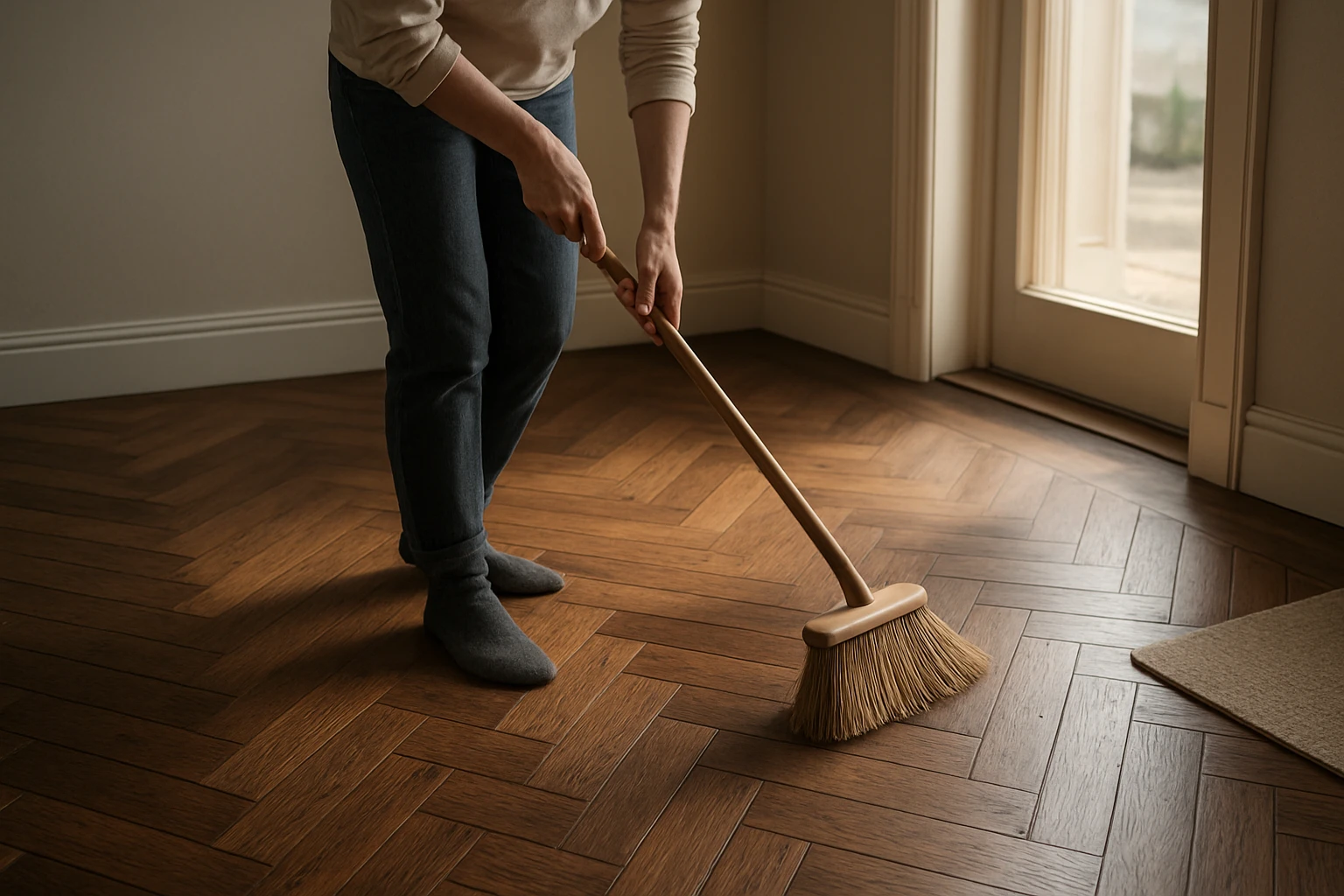
Sweep or vacuum with a soft-floor tool to remove grit. Use a damp mop with a recommended wood cleaner and avoid soaking the floor.
Minor Repairs
Small scratches often buff out or can be touched with a matching stain marker. For deeper damage, a single plank or module can be replaced if the parquet is modular.
Refinishing
Solid parquet accepts sanding and refinishing several times. Engineered parquet accepts one or two light sandings depending on veneer thickness. A common mistake is sanding too aggressively on engineered boards, which removes the thin top layer.
Quick Tips:
- Test cleaners on a hidden spot before full use.
- Maintain indoor humidity between 40 and 60 percent to limit shrink and swell.
- Place protective pads under heavy furniture to keep pattern edges from denting.
Choosing a Pattern for Each Room
Patterns interact with room shape, furniture, and light, so pick a pattern that supports the room function and scale.
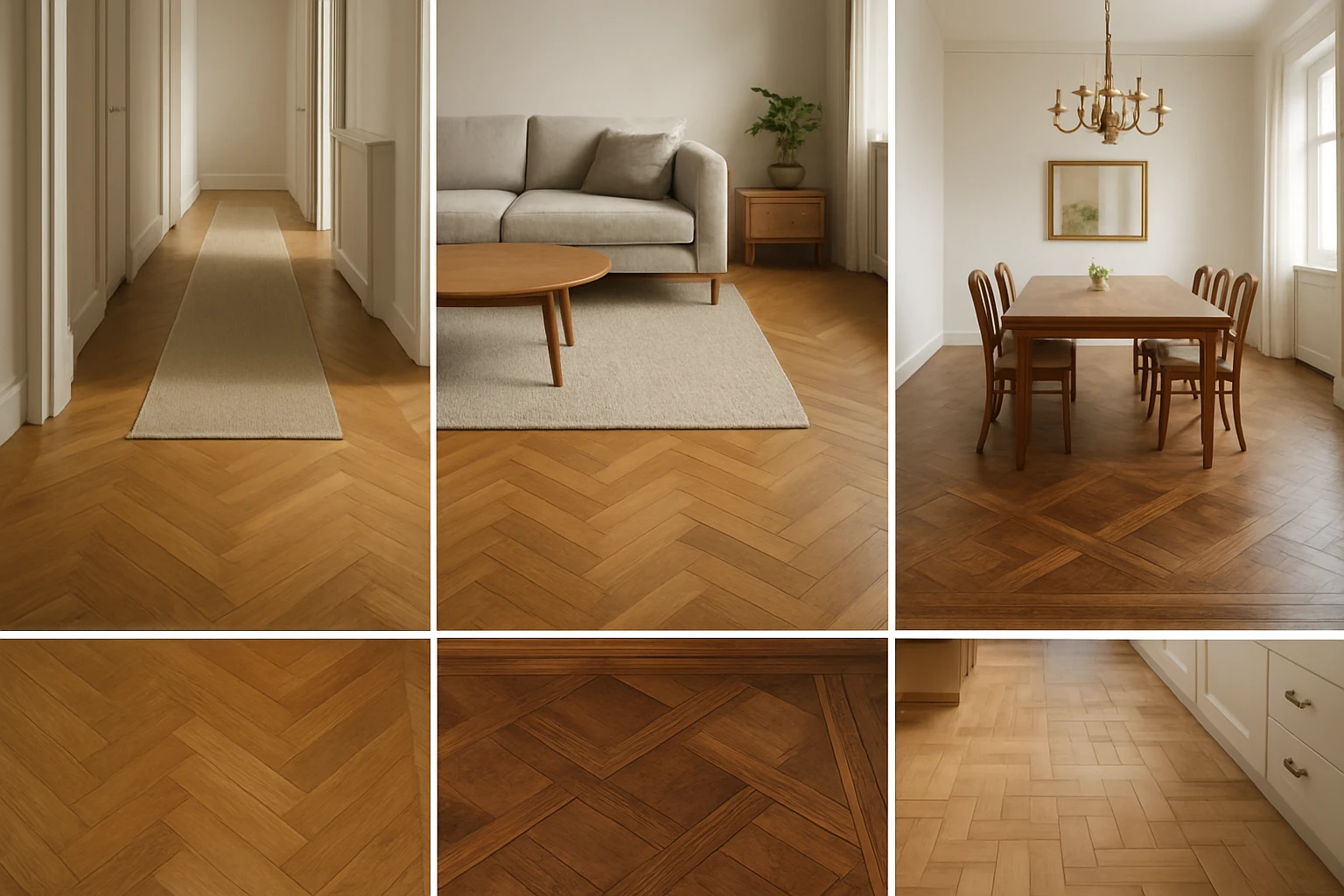
- Hallways: Chevron or long-run herringbone to emphasize length.
- Living Rooms: Herringbone for a balanced, warm look.
- Dining Rooms: Versailles or chevron to add formality.
- Kitchens: Basket weave or brick patterns for casual resilience.
A common mistake is choosing a highly ornate pattern in a small room, which can make the space feel busy. Often a simpler pattern or narrower plank width reads better in small rooms.
Common Mistakes and How to Avoid Them
Installers and homeowners both make avoidable errors. Watch for subfloor moisture, poor layout planning, and planks that have not acclimated to the room.
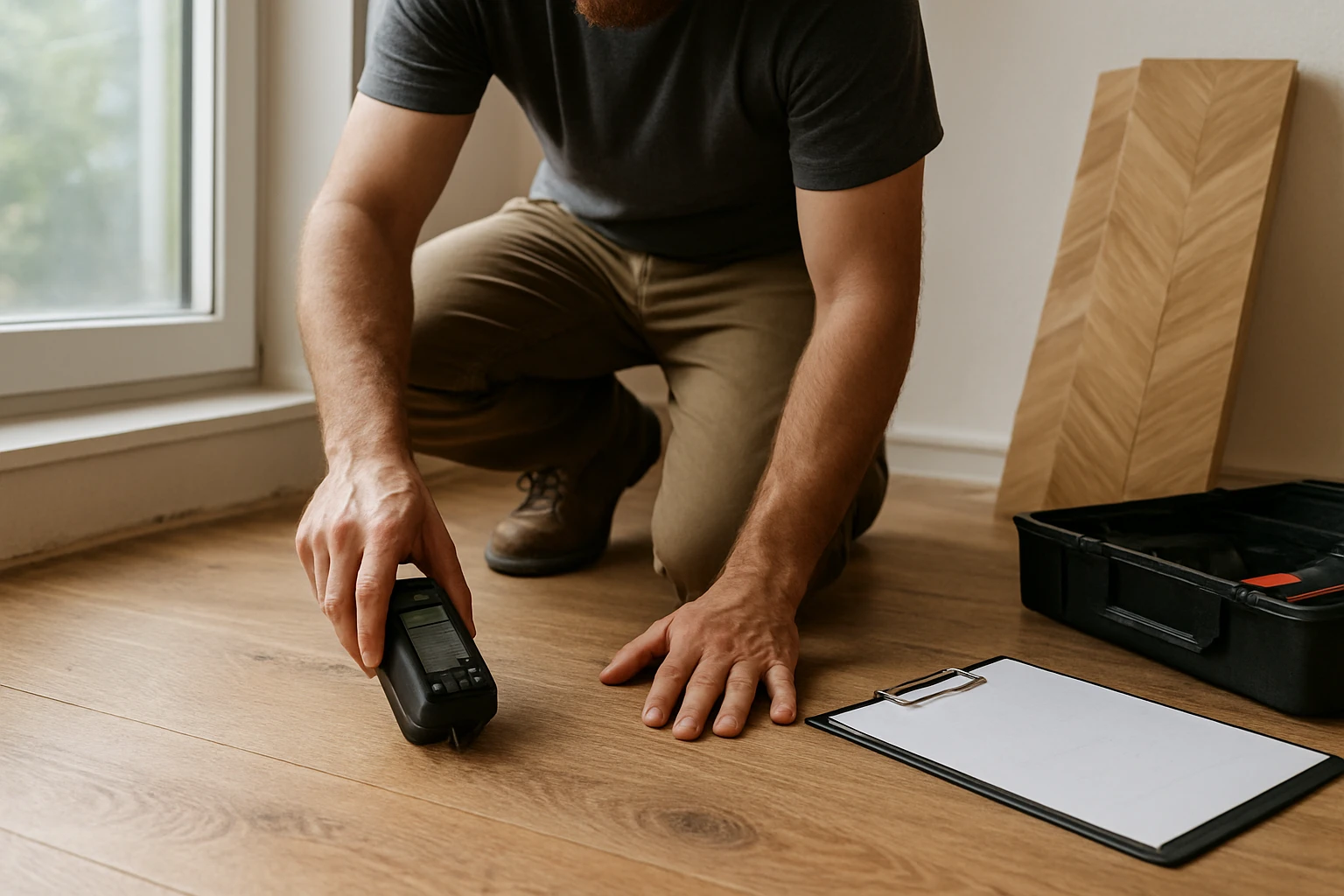
- Do not skip moisture testing of concrete or timber subfloors.
- Do not start without a reference line; an uneven layout shows quickly in patterned floors.
- Do allow boards to sit in the room for at least 48 hours to reduce cupping or gaps.
Final Recommendation
Choose the pattern that fits room scale, design goals, and how much care you want to give the floor. Herringbone gives classic warmth, chevron gives a bold line, and Versailles offers a formal statement. For practical budgets, engineered parquet in oak balances cost, stability, and finish options.
If you want hands-on advice for a particular pattern, material, or budget, start by comparing samples in your room under real lighting and consult a local installer for an on-site quote. For product options and formal service descriptions, see the site pages such as Parquet Flooring and Wooden Flooring.
Frequently Asked Questions
Which Parquet Pattern Makes a Small Room Look Larger?
A narrow herringbone with long, slim planks can make a small room read as wider because the stagger creates lateral flow. Plank width and direction matter more than ornamentation, so avoid very large panels in tight spaces.
Can Engineered Parquet Be Sanded and Refinished?
Engineered parquet can be lightly sanded and refinished one or two times depending on the thickness of the top veneer. Solid parquet accepts more sanding cycles, so it is better for long-term refinishing plans.
Is Chevron Harder to Install Than Herringbone?
Yes. Chevron requires precise angled cuts so seams meet perfectly, which makes layout and cutting more demanding. That precision typically raises both installation time and labor cost.
How Do I Maintain a Parquet Floor Daily?
Sweep or vacuum with a soft-floor tool to remove grit and use a damp mop with a wood-approved cleaner. Avoid soaking the floor and use felt pads under furniture to prevent dents.