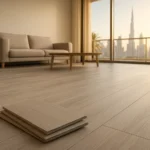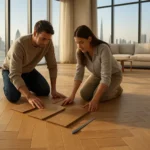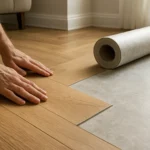
Wondering How Much Does Flooring Cost in Dubai? Typical flooring costs in Dubai vary with the material, quality and installation method. As a rule of thumb, basic vinyl can be around 35 AED per square metre while premium marble, including installation, can reach 400 AED per square metre or more. Labour, site preparation and transport add to the final bill, so a mid-range full refurbishment of a 60 sqm apartment commonly lands between 8,000 and 25,000 AED. Allow a 10 to 20 percent contingency for finishes and unexpected site work.
Key Statistics
- Basic vinyl or ceramic tile materials often start around 35 to 75 AED per sqm.
- Engineered wood and good-quality laminate typically run 120 to 300 AED per sqm installed.
- Marble and high-end natural stone can range from 200 to 600 AED per sqm installed for premium finishes.
- Typical labour and installation add 20 to 120 AED per sqm depending on material and complexity.
- A 50 to 70 sqm Dubai apartment full-floor replacement usually costs between 7,000 and 30,000 AED depending on choices.
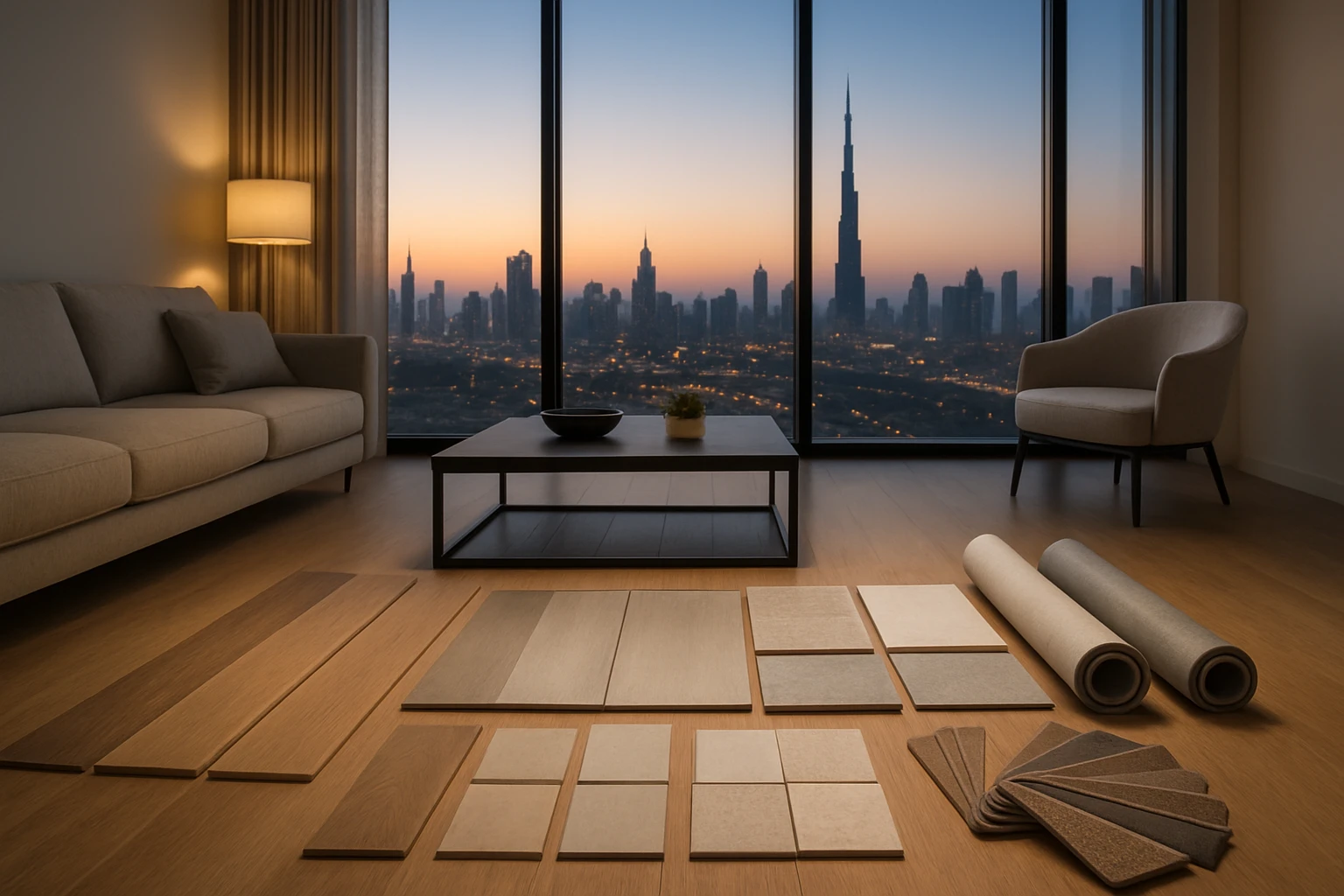
Average Flooring Costs in Dubai
Prices depend on the material, brand, finish and how much prep work the floor needs. Below I give a simple average range you can use when budgeting, and then we break those numbers down by material and room type.
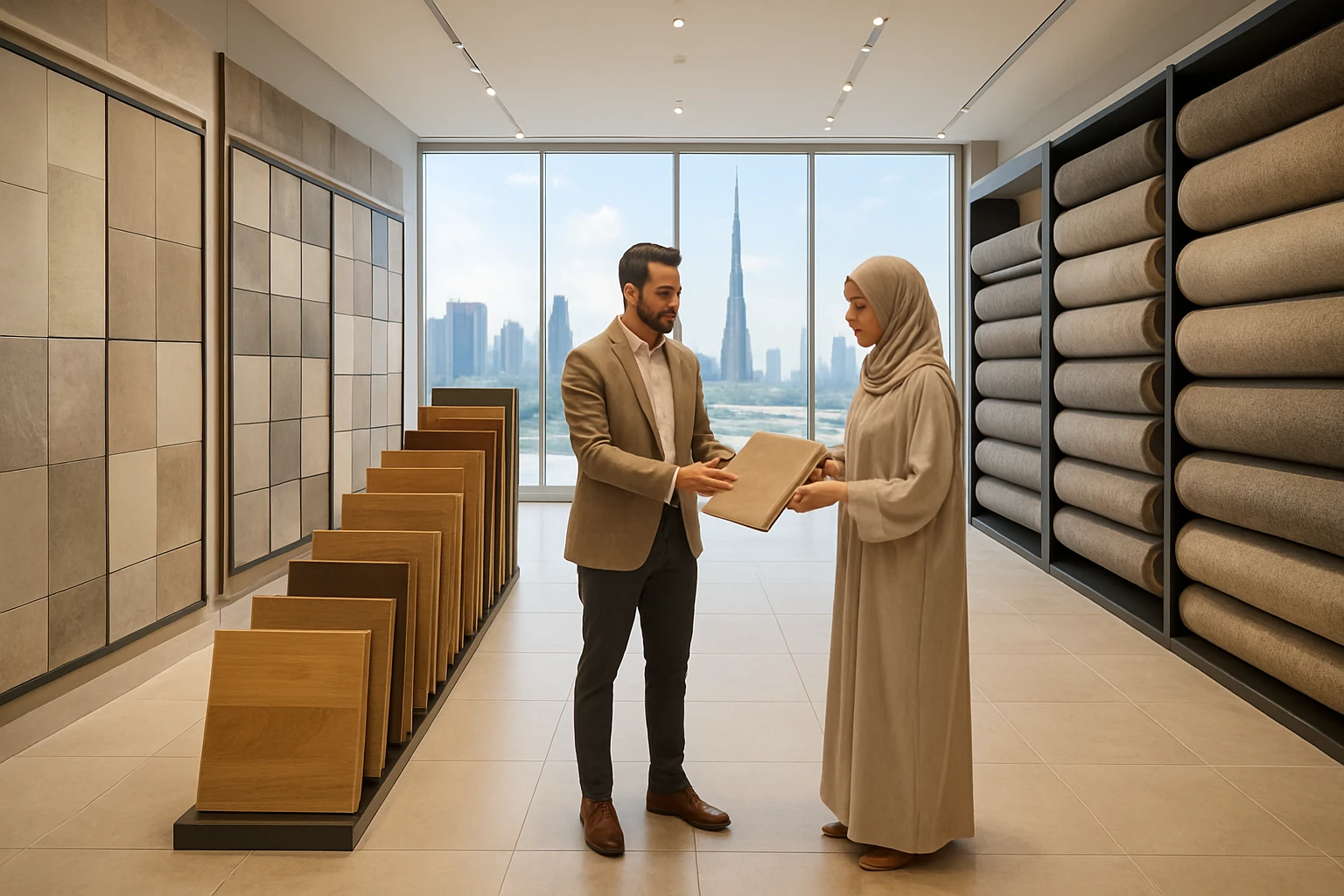
Typical cost ranges (materials plus standard installation):
| Material Type | Typical Material Price (AED/sqm) | Typical Installed Price (AED/sqm) | Typical Lifespan (Years) |
|---|---|---|---|
| Basic Vinyl | 20 – 50 | 35 – 75 | 7 – 15 |
| Laminate | 45 – 120 | 80 – 160 | 10 – 20 |
| Engineered Wood | 120 – 220 | 160 – 320 | 15 – 25 |
| Solid Wood (rare) | 200 – 400 | 300 – 500 | 25 – 50 |
| Ceramic/Porcelain Tile | 30 – 180 | 50 – 240 | 20 – 40 |
| Marble / Natural Stone | 150 – 500+ | 250 – 600+ | 30+ |
| Carpet (roll) | 25 – 120 | 50 – 180 | 5 – 15 |
A few notes on these ranges. Material price is what you pay for the product at the shop. Installed price includes labour, adhesive, trims and basic site prep. If the floor needs extra work such as removing old tiles, smoothing the screed or fixing damp issues, add 20 to 80 AED per sqm.
Cost by Material Type
Below I cover common materials sold and used in Dubai, with real-world price guidance and what you should expect to pay for installation and maintenance.
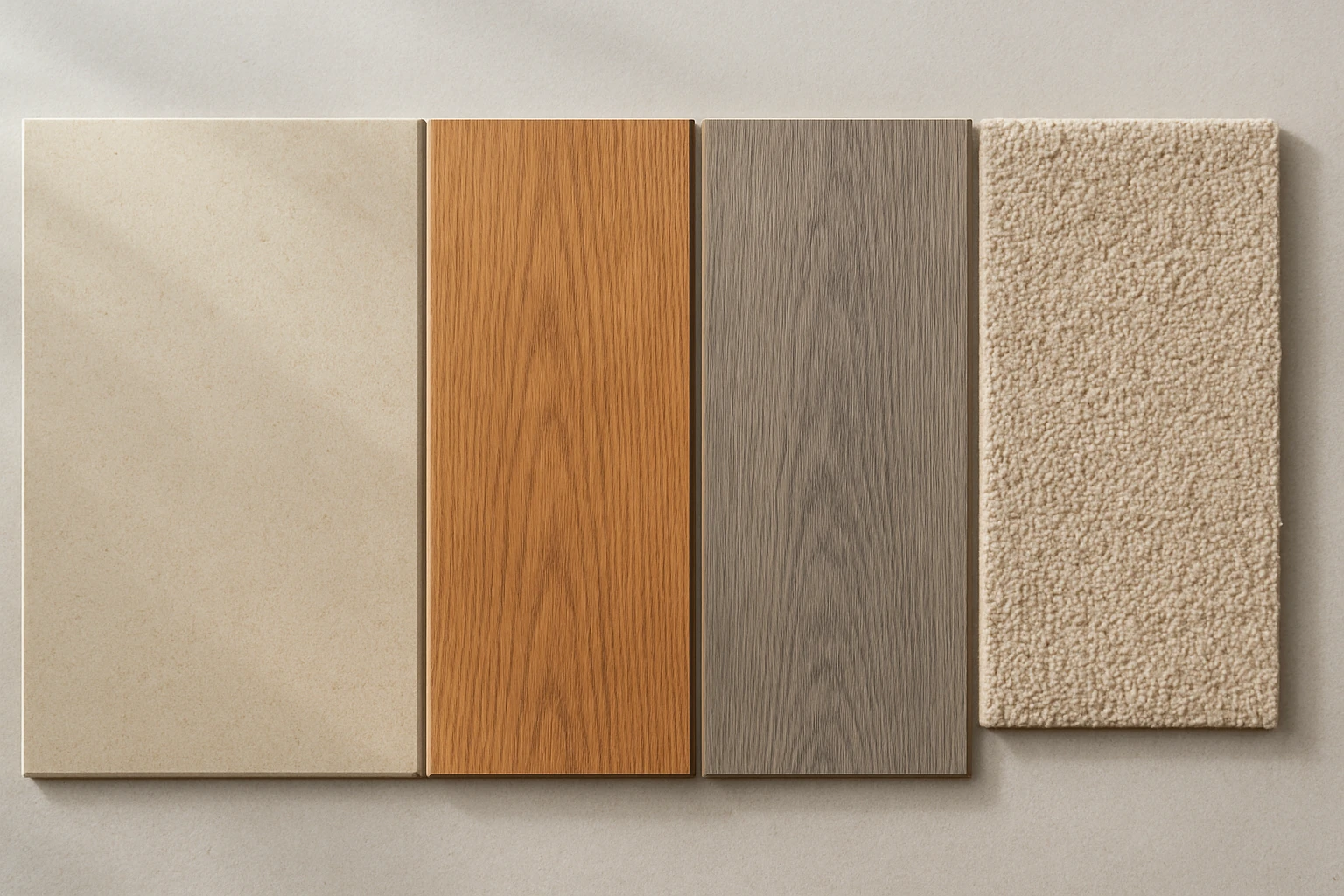
Vinyl Flooring
Vinyl is a budget-friendly option that resists moisture and comes as planks or large tiles. It is common in rental flats and in areas that need easy cleaning.
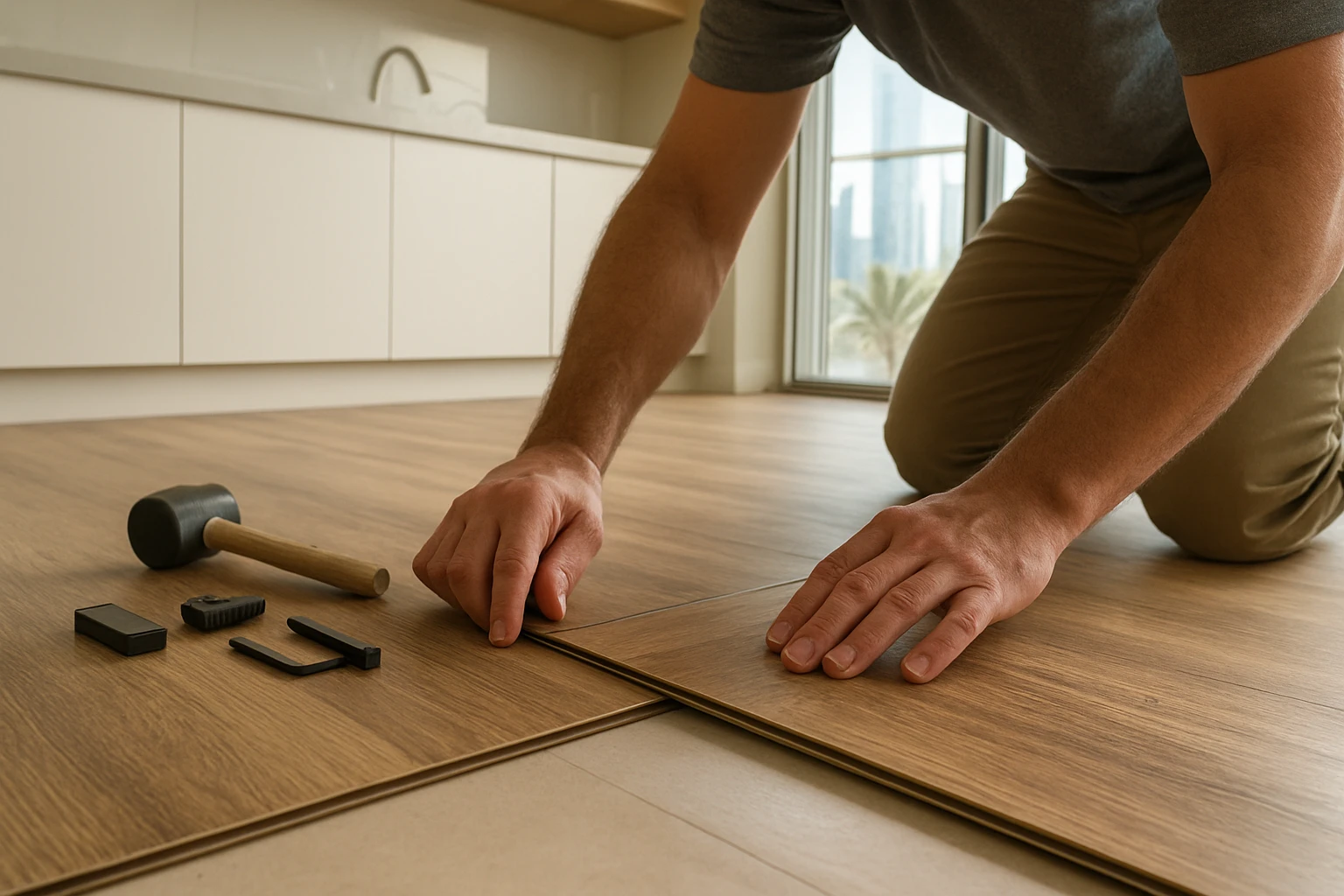
Pros:
- Low cost and quick to install.
- Good water resistance and easy to maintain.
Cons:
- Less long-term value than wood or marble.
- Can fade or dent under heavy furniture or heat.
Price example: Basic vinyl materials 20 to 50 AED/sqm, installed 35 to 75 AED/sqm.
Laminate Flooring
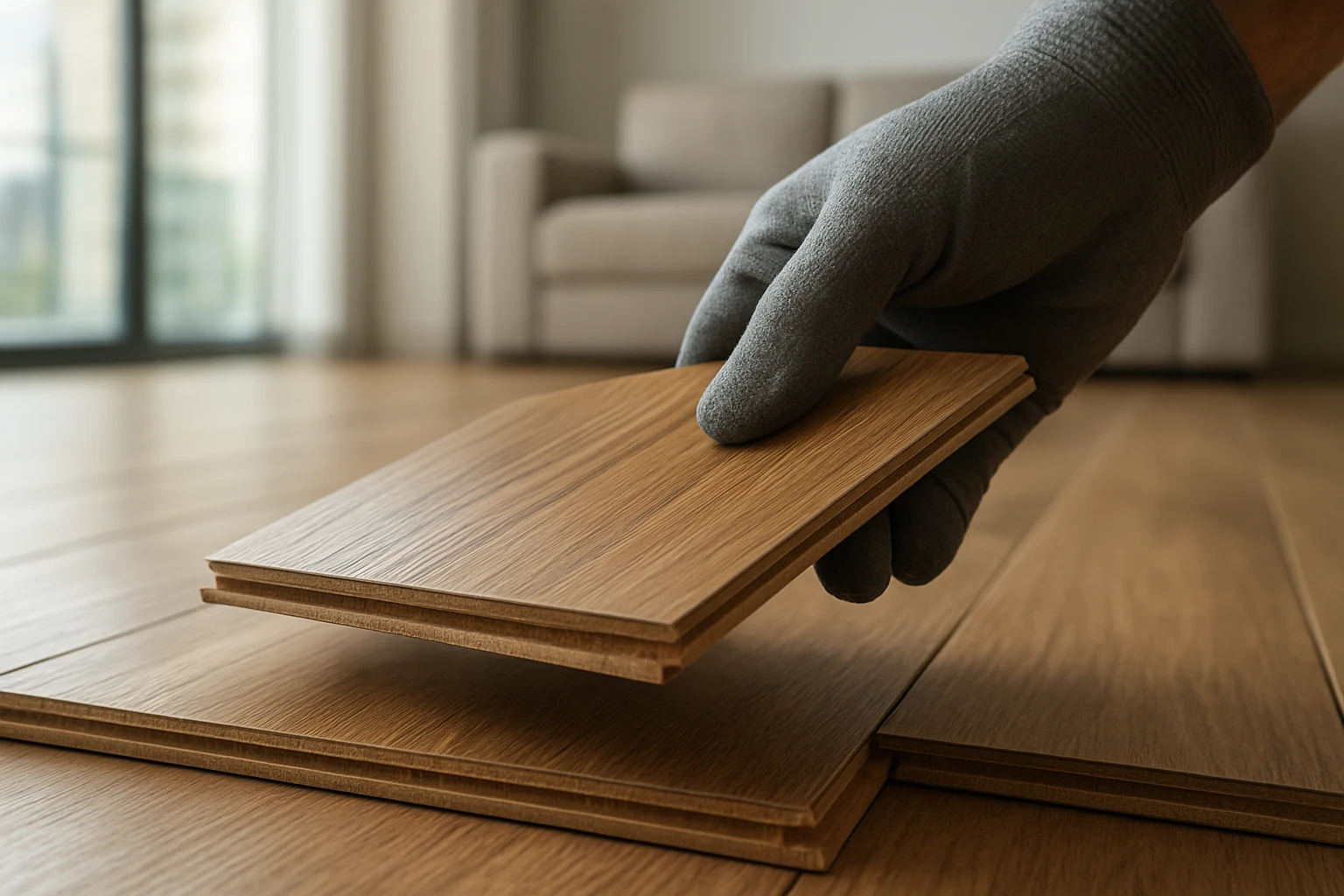
Laminate mimics wood at a lower price. It is a layered product that clicks together and works well in living areas with moderate humidity.
Pros:
- Affordable wood look and fast installation.
- Scratch resistant on many products.
Cons:
- Sensitive to standing water and high humidity.
- Shorter lifespan than engineered wood.
Price example: Materials 45 to 120 AED/sqm, installed 80 to 160 AED/sqm.
Engineered Wood
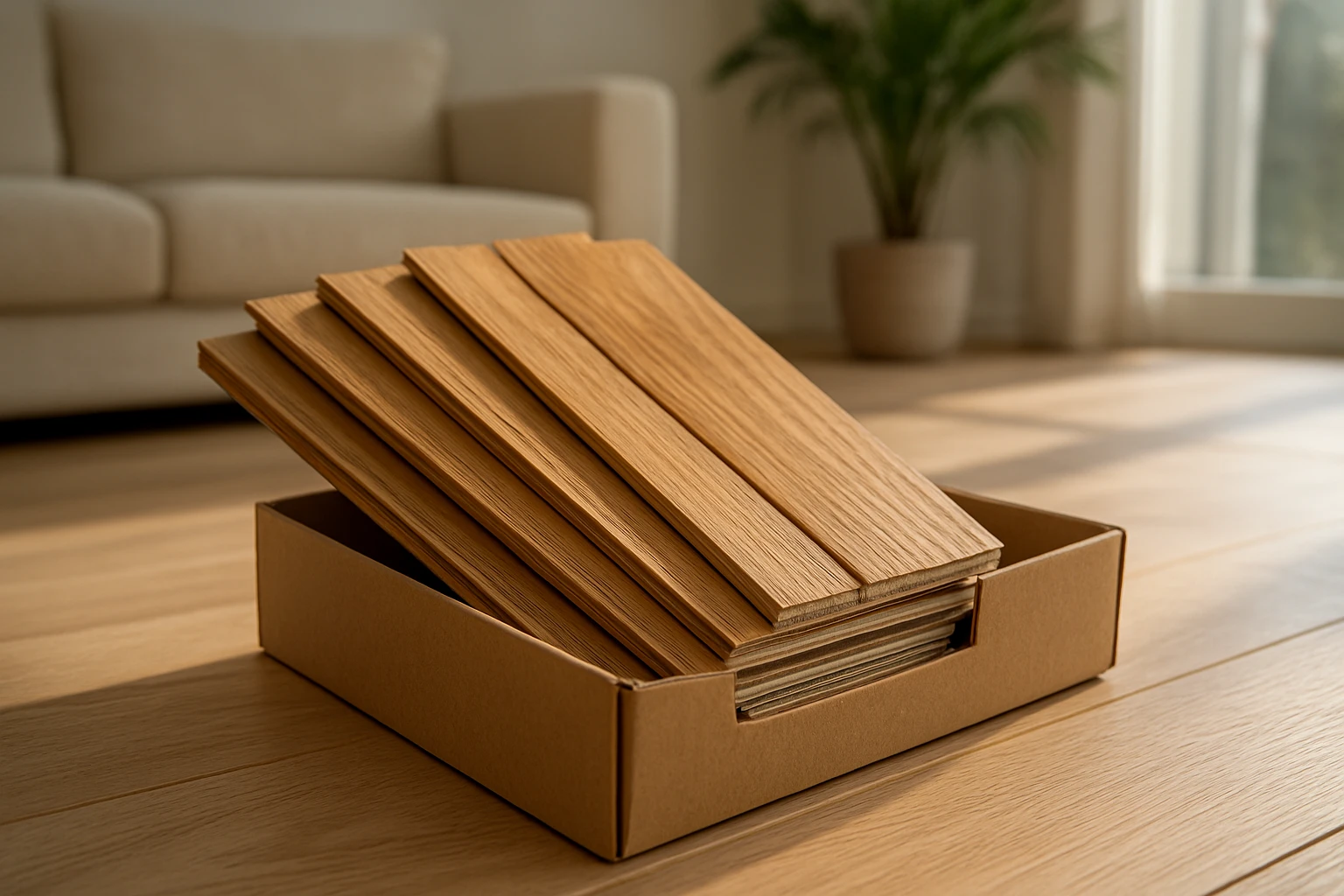
Engineered wood has a thin hardwood layer over a plywood base. It copes with Dubai humidity better than solid wood and still looks like real wood.
Pros:
- Real wood surface with more stability.
- Can be sanded lightly depending on veneer thickness.
Cons:
- More expensive than laminate or vinyl.
- Requires careful installation and acclimatisation.
Price example: Materials 120 to 220 AED/sqm, installed 160 to 320 AED/sqm.
Solid Wood Flooring
Solid wood is used less often in Dubai flats because of humidity, but it remains a premium choice for villas with climate control and careful installation.
Pros:
- High long-term value and a classic look.
- Can be refinished multiple times.
Cons:
- Sensitive to humidity and movement.
- High cost and longer installation time.
Price example: Materials 200 to 400 AED/sqm, installed 300 to 500 AED/sqm.
Ceramic and Porcelain Tile
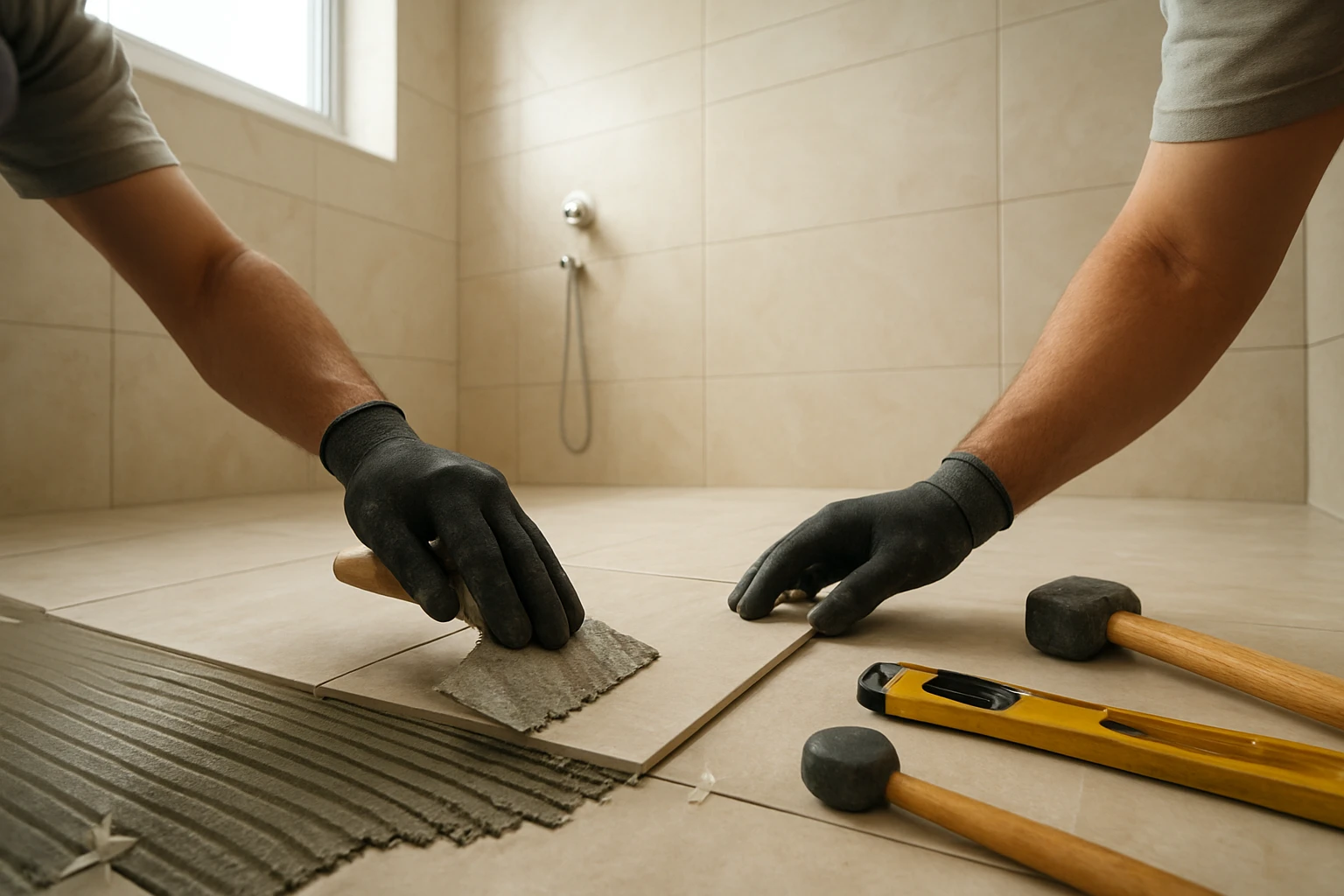
Tiles are durable and common across Dubai, especially in kitchens, bathrooms and living areas where cool floors help with the heat.
Pros:
- Durable and easy to clean.
- Wide range of styles, finishes and sizes.
Cons:
- Hard underfoot and can feel cold without underfloor heating.
- Grout needs maintenance.
Price example: Materials 30 to 180 AED/sqm, installed 50 to 240 AED/sqm.
Marble and Natural Stone
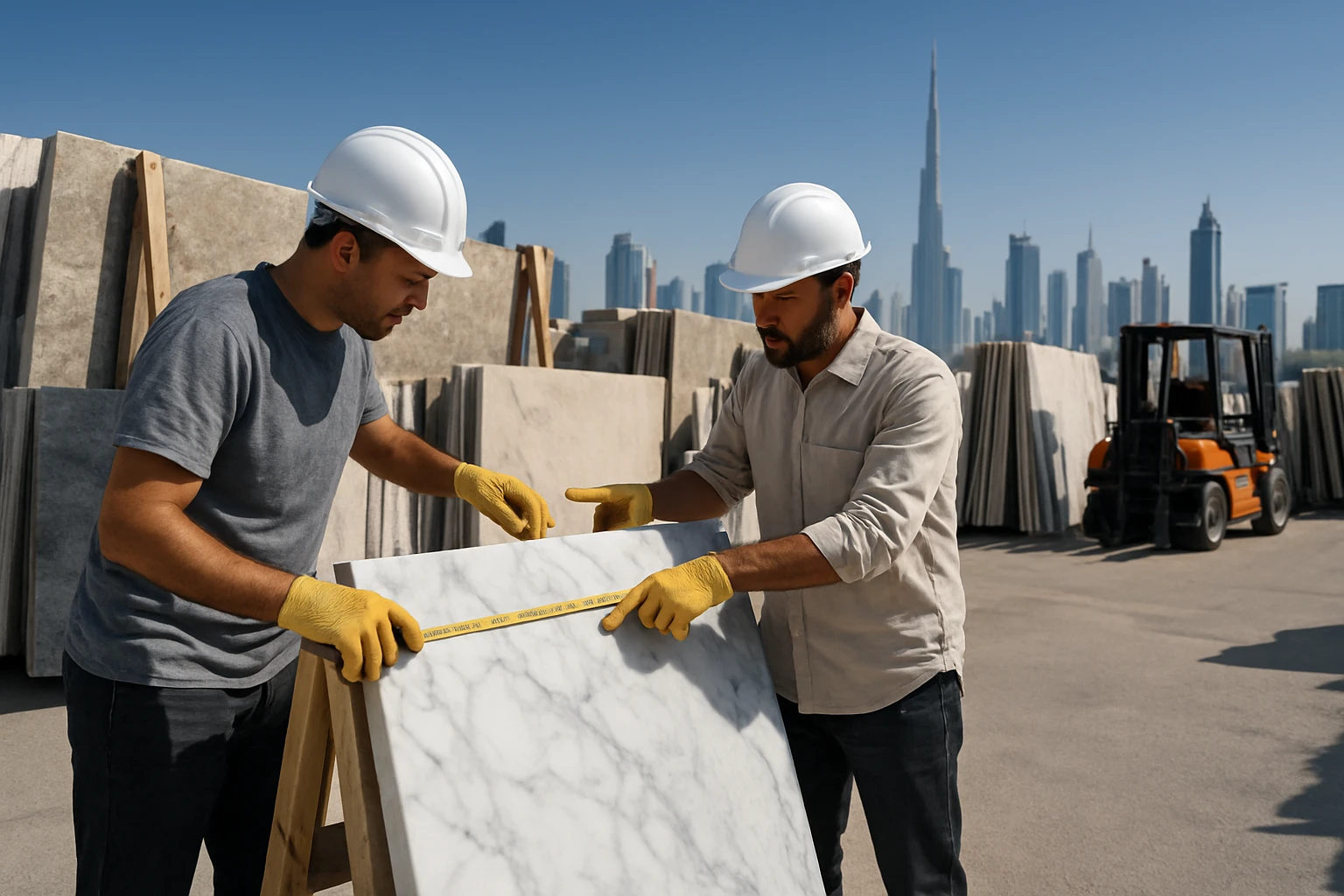
Marble and high-end stone are prized in Dubai for their look and prestige. They need careful handling and skilled installers.
Pros:
- Luxurious appearance and long life when cared for.
- Adds value to premium properties.
Cons:
- Very high upfront cost and ongoing care needs.
- Can stain or etch without protection.
Price example: Materials 150 to 500+ AED/sqm, installed 250 to 600+ AED/sqm.
Carpet
Carpet remains common in bedrooms and majlis rooms. It offers warmth and sound absorption but needs regular cleaning in dusty climates.
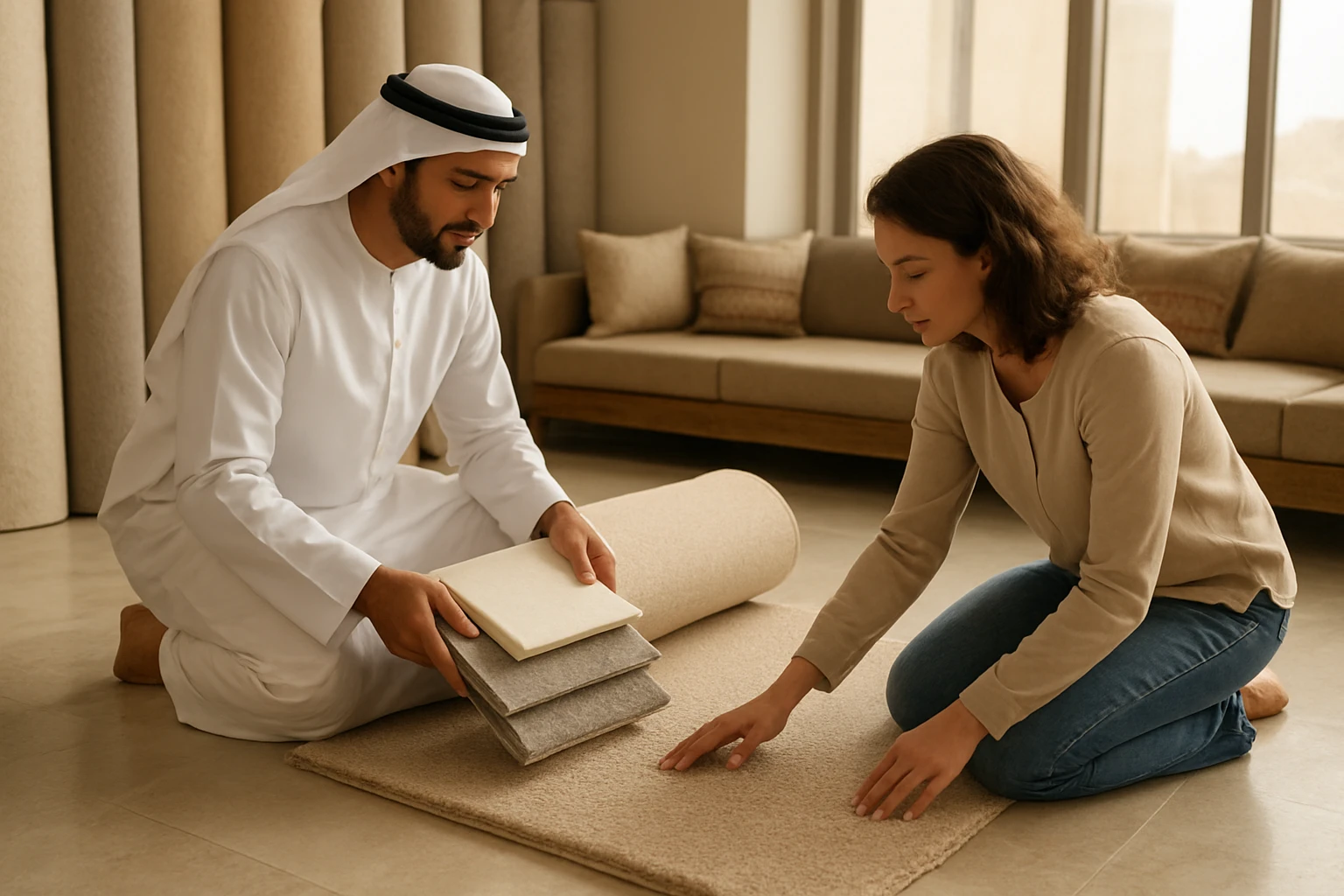
Pros:
- Comfortable and warm underfoot, and dampens sound.
- Lower material cost for many styles.
Cons:
- Requires regular professional cleaning and can hold dust.
- Shorter lifespan in high-traffic areas.
Price example: Materials 25 to 120 AED/sqm, installed 50 to 180 AED/sqm.
Installation and Labour Rates
Labour costs in Dubai vary with trade skills, the complexity of the job and whether you hire a specialist installer or a general contractor. Expect a mix of flat rates and per-sqm pricing.
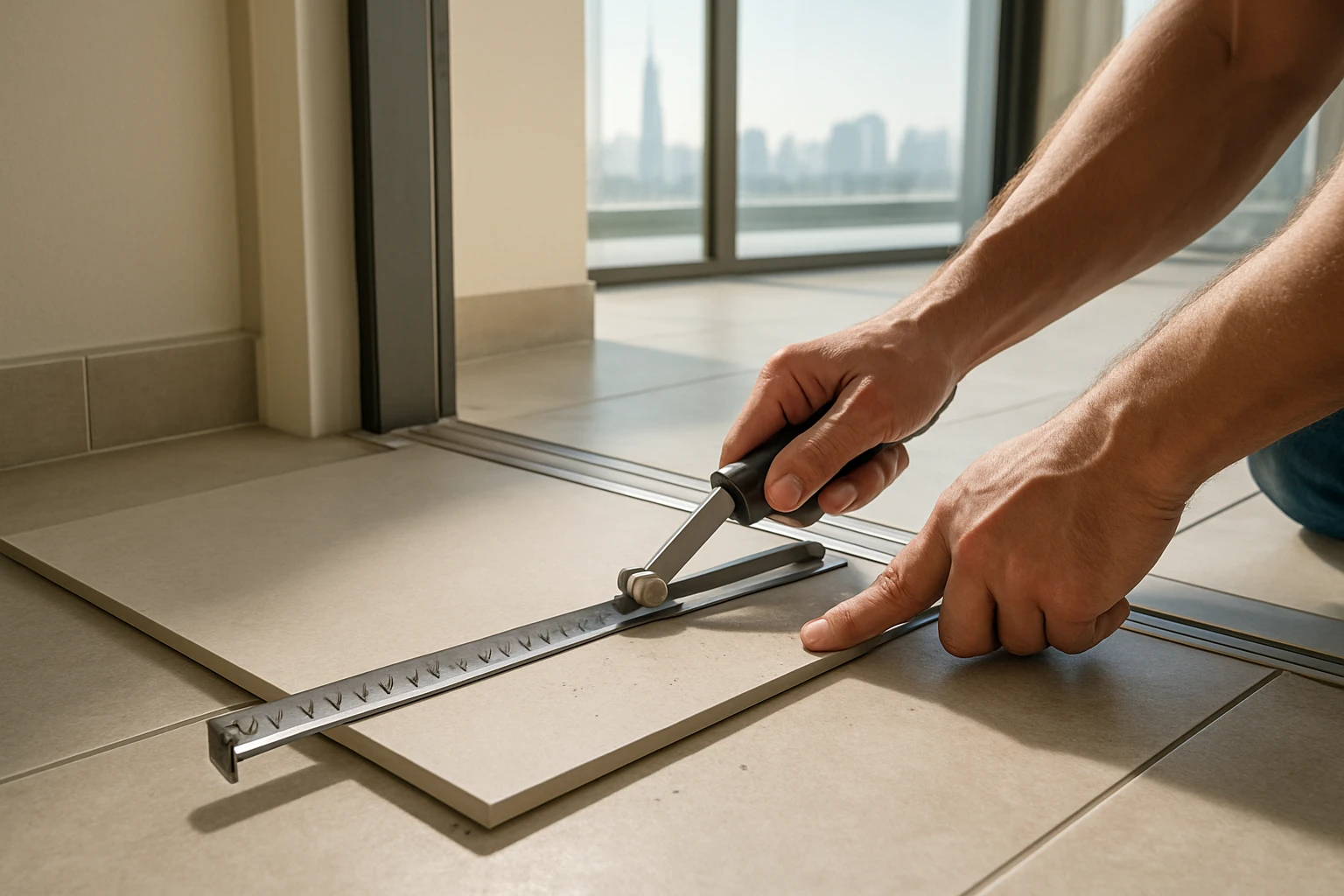
Common labour guidelines:
| Task | Typical Labour Cost (AED) |
|---|---|
| Simple vinyl or laminate laying per sqm | 15 – 50 |
| Tile laying per sqm (including grout) | 30 – 120 |
| Engineered wood per sqm | 40 – 120 |
| Marble/natural stone per sqm | 80 – 250 |
| Carpet fitting per sqm | 20 – 60 |
Factors that raise labour cost:
- Removing old flooring and waste disposal.
- Heavy levelling, screed or waterproofing.
- Complex tile patterns or heated floors.
- Working at height or on uneven surfaces.
A common breakdown is material making up 55 to 80 percent of the total cost for very cheap floors, and 40 to 60 percent for expensive stone where labour and specialist work increase the labour share.
Cost Examples by Room Size
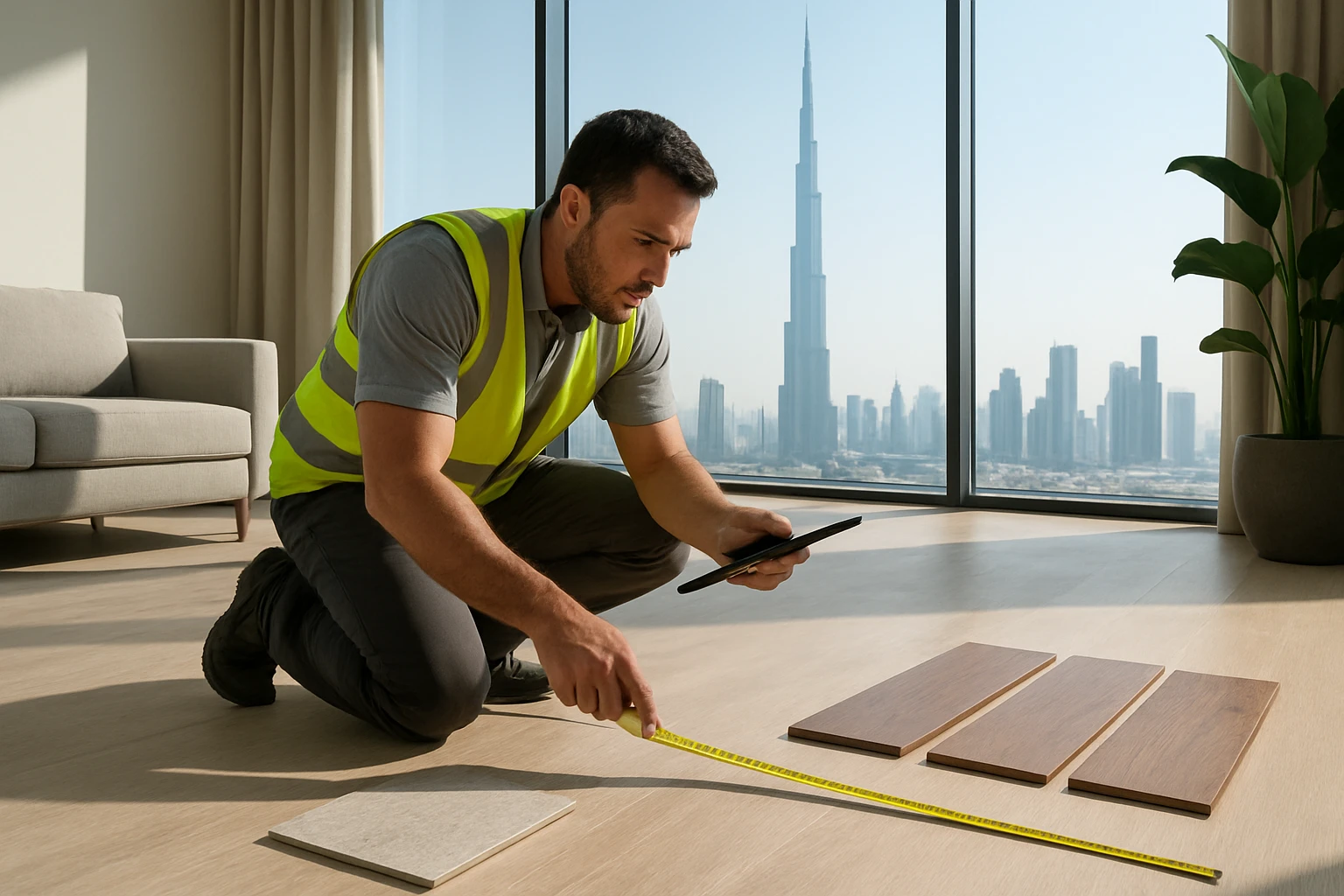
Use these quick examples to estimate common projects. Add 10 to 20 percent contingency for trims, thresholds and extra materials.
| Room Size | Vinyl Installed (AED) | Laminate Installed (AED) | Engineered Wood Installed (AED) | Tile Installed (AED) |
|---|---|---|---|---|
| Small bedroom 12 sqm | 420 – 900 | 960 – 1,920 | 1,920 – 3,840 | 600 – 2,880 |
| Living room 25 sqm | 875 – 1,875 | 2,000 – 4,000 | 4,000 – 8,000 | 1,250 – 6,000 |
| 2-Bed Apartment 60 sqm | 2,100 – 4,500 | 4,800 – 9,600 | 9,600 – 19,200 | 3,000 – 14,400 |
These examples assume standard site conditions and average-quality products. High-end materials or complex patterns can push totals well above these ranges.
Ways to Save on Flooring Without Sacrificing Quality
You do not need to pick the cheapest product to save money. Here are practical steps that often lower cost without losing value.

- Buy end-of-line or clearance tiles for larger areas where pattern match is not critical.
- Choose medium-grade materials and spend more on high-impact spaces like living rooms or entrance halls.
- Schedule the project during slower months when contractors may offer better rates.
- Ask suppliers about bulk discounts and free delivery for large orders.
- Keep subfloor work minimal by selecting floating floors when moisture and level tolerances allow.
- Get at least three quotes and compare material brands and warranty terms.
A common mistake is accepting the first low quote without checking references. A slightly pricier installer with solid references often saves money on rework and delays.
Durability and Maintenance Costs
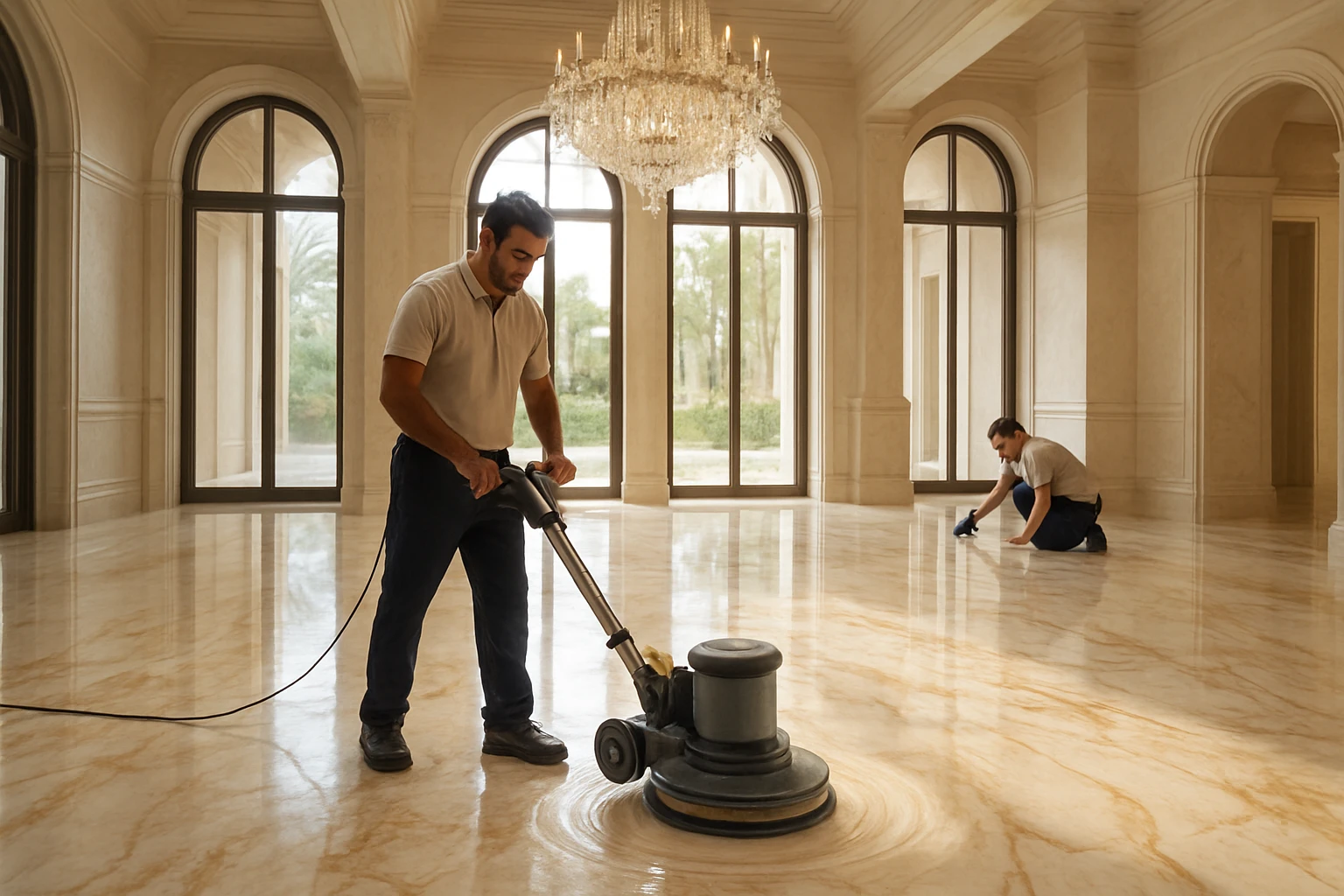
Think beyond installation. Maintenance and repair affect lifetime cost and satisfaction.
- Vinyl and laminate need little maintenance and have low recurring cost.
- Engineered wood needs periodic re-oiling or light sanding depending on the finish.
- Marble needs sealing and careful cleaning products to avoid etching and stains.
- Tiles need grout cleaning and occasional resealing to extend life.
- Carpets require regular vacuuming and annual deep cleaning to keep dust and allergens down.
Maintenance annual cost estimates per material:
| Material | Annual Maintenance Cost (AED) |
|---|---|
| Vinyl / Laminate | 50 – 300 |
| Engineered Wood | 200 – 1,000 |
| Tile | 100 – 500 |
| Marble / Stone | 300 – 1,500 |
| Carpet | 150 – 800 |
Choosing Materials for Dubai Climate
Dubai is hot and sometimes humid, and sand gets tracked inside. Pick floors that cope with those conditions and match your lifestyle.
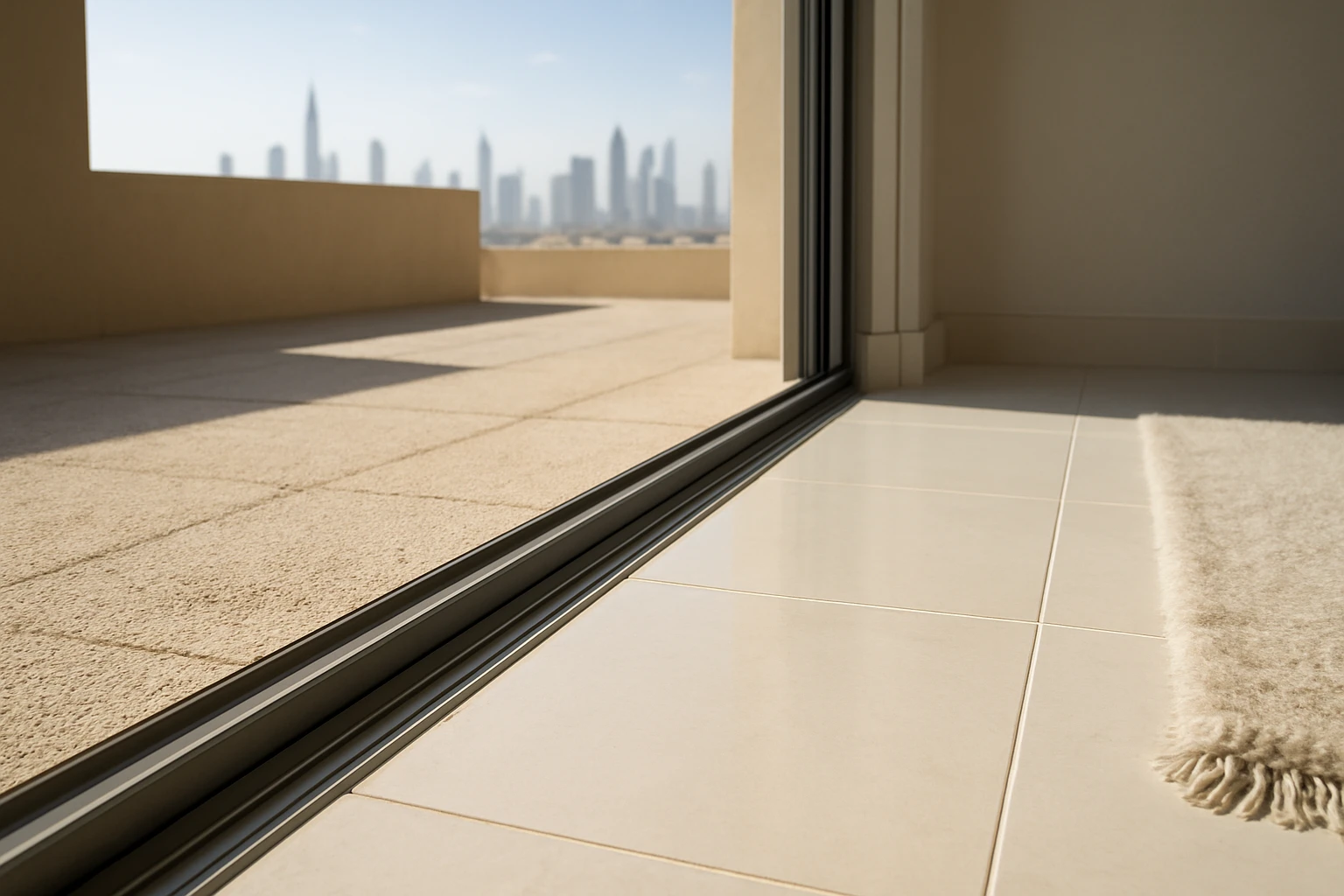
- Avoid untreated solid wood in high-humidity rooms.
- Porcelain and quality tiles handle heat and moisture well.
- Use rugs or carpets in living rooms to reduce sand wear on hard floors.
- Check UV resistance for vinyl or engineered wood to avoid fading near large windows.
How to Budget and Get Reliable Quotes
A clear brief saves time and money. Write a short scope for each room and ask suppliers to price material, labour and extras separately.
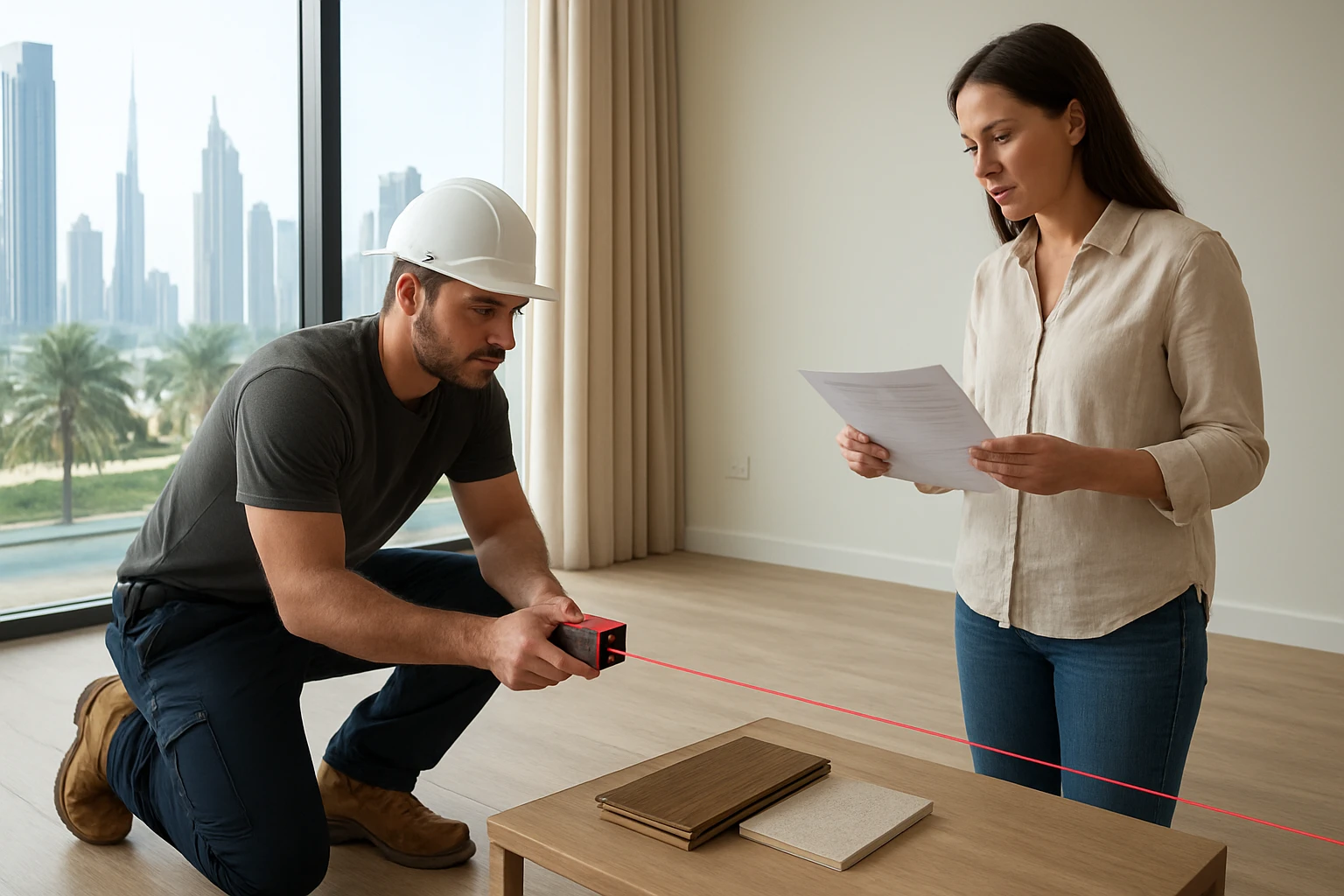
Checklist to give to suppliers:
- Exact area in square metres for each room.
- Existing floor type and whether removal is needed.
- Desired finish and brand names if you prefer them.
- Whether thresholds, skirting and trims are included.
- Timeline and access constraints.
Ask each bidder to show:
- A breakdown of material cost, labour, and other charges.
- Warranty on materials and workmanship.
- References or recent project photos.
A common budgeting rule is material selection plus installation plus 15 percent contingency. For a clearer bid comparison, request line-item pricing so you can see where to reduce cost if needed.
Final Comparison Table and Quick Decision Guide
| Decision Goal | Best Material Choices | Budget Range (AED/sqm Installed) |
|---|---|---|
| Lowest upfront cost | Basic vinyl, budget tile | 35 – 100 |
| Good look and value | Engineered wood, mid-range tile | 160 – 320 |
| Luxury appearance | Marble, premium wood | 300 – 600+ |
| Wet areas | Porcelain tile, quality vinyl | 50 – 240 |
| Bedrooms and comfort | Carpet, engineered wood | 50 – 320 |
Quick tip: Decide which rooms matter most for appearance and durability, and spend more on those while choosing simpler options for secondary areas like storerooms and corridors.
Next Steps When You Are Ready
- Measure accurately and make a simple room list.
- Choose two or three material samples and view them under real light at different times of day.
- Contact at least three installers with your brief and ask for a written quote.
- Check references and recent project photos.
- Agree milestones and a payment schedule before work starts.
If you want, I can help estimate costs for your exact room sizes and preferred materials. Share the room areas and the material you prefer, and I will prepare a sample budget and checklist you can give to local suppliers.
Frequently Asked Questions
How Much Does It Cost to Replace Flooring in a 2-bedroom Apartment in Dubai?
For a typical 2-bedroom apartment of about 60 sqm, expect total costs from roughly 2,100 AED for basic vinyl up to 19,200 AED or more for engineered wood; tiles and mid-range options fall between 3,000 and 14,400 AED. Include 10 to 20 percent contingency for extras.
Are Labour Rates for Flooring Higher in Dubai Than Elsewhere?
Labour rates vary but are competitive for the region. Skilled trades like marble installation cost more due to specialist skills. Expect labour to add 20 to 250 AED per sqm depending on material and complexity.
Is Marble Worth the Cost in Dubai?
Marble gives a premium look and long life when cared for, and it suits luxury villas and high-end apartments. It costs significantly more and needs sealing and careful cleaning, so it is best where the appearance boosts property value.
Can I Install Engineered Wood in Dubai Without Problems?
Yes, engineered wood is generally stable in Dubai when installed correctly and allowed to acclimatise. Make sure the installer follows manufacturer guidelines and the building has reasonable humidity control.
What Should I Ask a Contractor Before Hiring Them?
Ask for a written breakdown of materials and labour, warranty terms, a clear timeline, site preparation details, and references or photos of recent similar projects. A transparent quote helps avoid surprises.